When a city is as ancient as Istanbul it should be no wonder to encounter historical findings at the most unexpected locations. Excavations on the First Hill, which is the area where today you see the Hagia Sophia, the Topkapı Palace and the Sultan Ahmet Mosque, have revealed artefacts and potteries dated to the 6th millennium B.C. Keeping in mind the succeeding conquests and numerous rulers across the following centuries and different empires with different cultures, even common sense would imply the possibility of a multi-layered city grounds. Overturn a stone and you might easily be at the threshold of an older historical realm. Yet, the Zeytinburnu Mosaic Museum still took Istanbulites by surprise. The excitement was caused both by the location of the findings and the initial intent of the endeavours on the site.
The Zeytinburnu Mosaic Museum is in the Zeytinburnu district of Istanbul. It is at a 6-minute walking distance from the Zeytinburnu Marmaray Station (second stop from Yenikapı in the direction of Halkalı). The museum is housed in a 19th century historical building. It was during the restoration of this building from the Ottoman era that led to the discovery of valuable findings dated to a much older period of time.
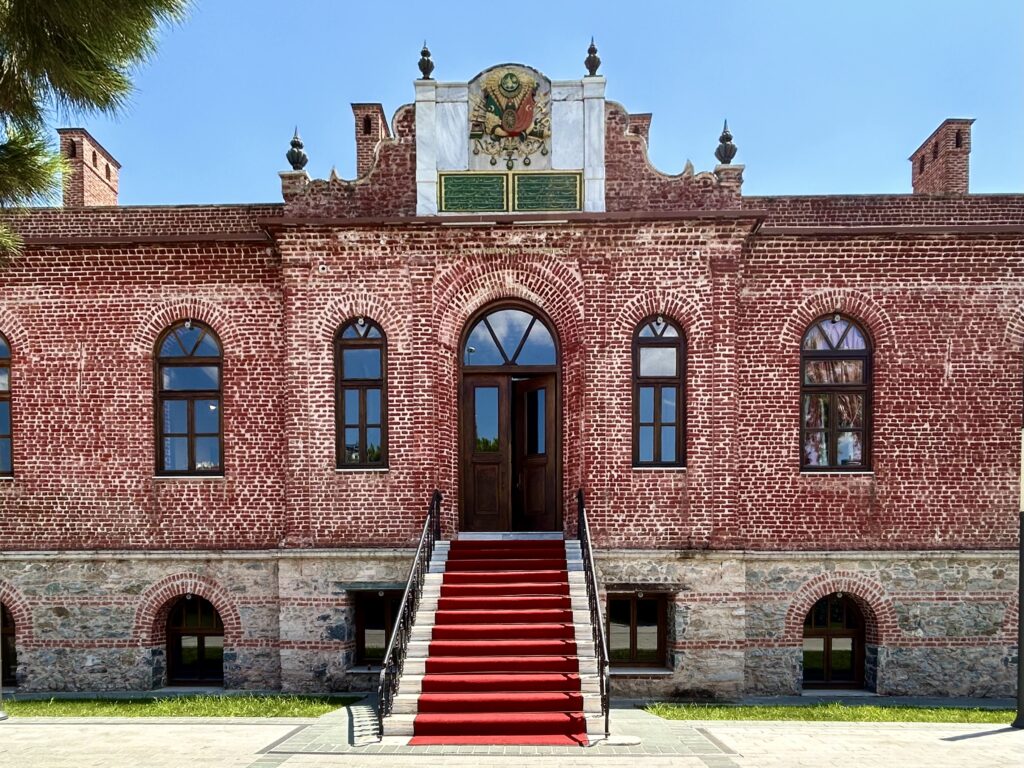
The Zeytinburnu Municipality was operating in the above-mentioned building since 1984 when in 2015 it was decided to move out and to turn the place into a cultural centre. Restorations started that year. The building was originally a military hospital. The oldest documents about the building are from the year 1828 and they testify the existence of a vineyard at the back that stretches down to the seashore. The railway connecting Istanbul to Dedeağaç (today Alexandroupoli in Greece) passed in front of the hospital, most probably location-wise on the same track of the current Marmaray rail system. The building was demolished and rebuilt twice. The last of these was in 1893, during the reign of Sultan Abdülhamid II. At this point, it reached a capacity of 150 beds. The hospital continued to operate through major epidemics and wars until 1920, when Istanbul was occupied by British forces at the end of WWI. The doctors and the medical staff of the hospital moved to Anatolia and joined the national forces during the War of Independence. In 1935, more than a decade after the foundation of the Turkish Republic (1923), the building once again opened its doors as a military hospital. In 1954 it was renovated. However, it was closed down shortly after in 1956 and turned into a dormitory for the children of military officers who were studying at the Istanbul University. The building was used for several other purposes until 1984 when it was transferred to the Zeytinburnu Municipality as a head quarters facility. More than 30 years later, in 2015, the municipality moved to a modern complex and restorations began in order to turn the historic building into a district art centre.
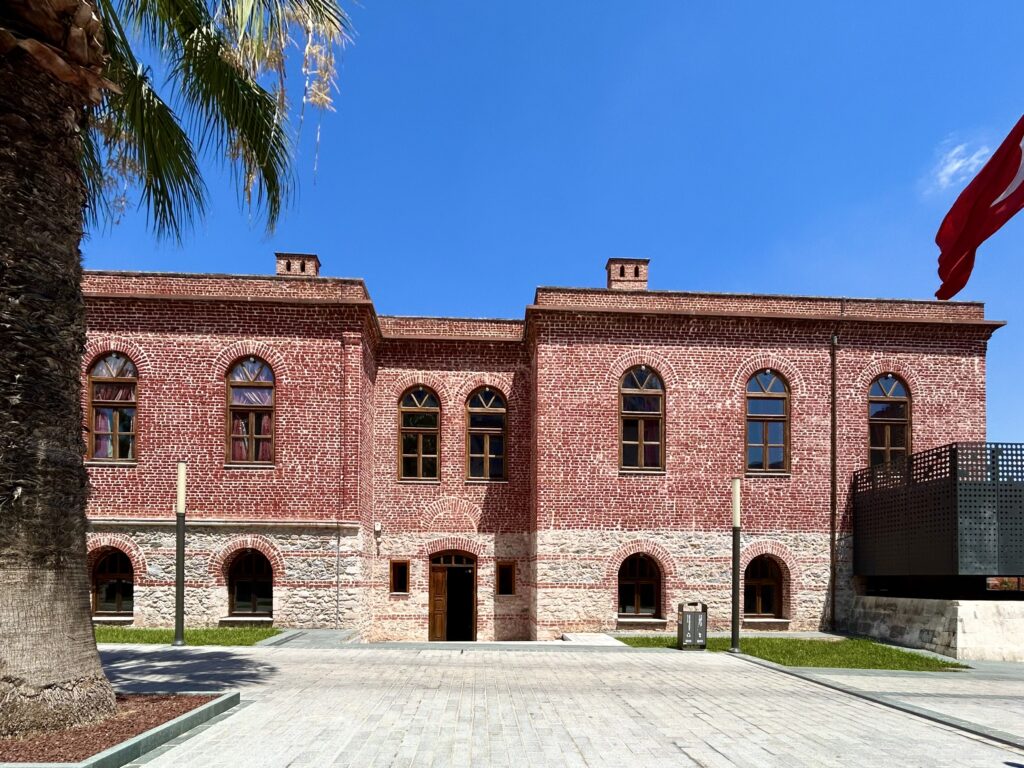
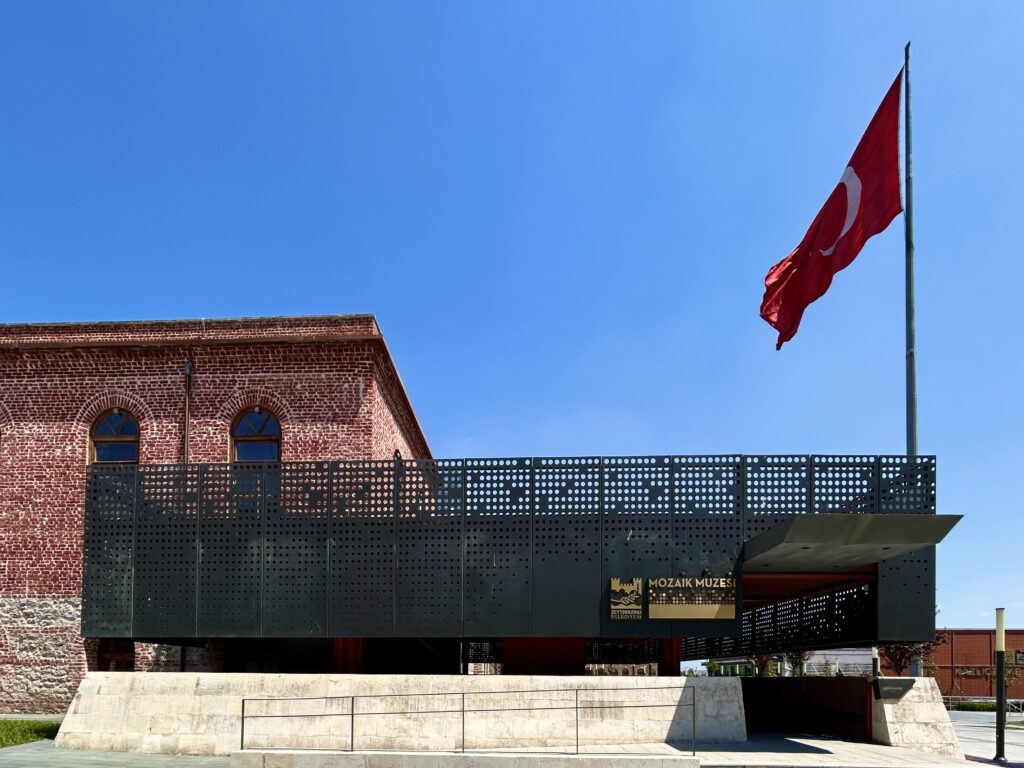
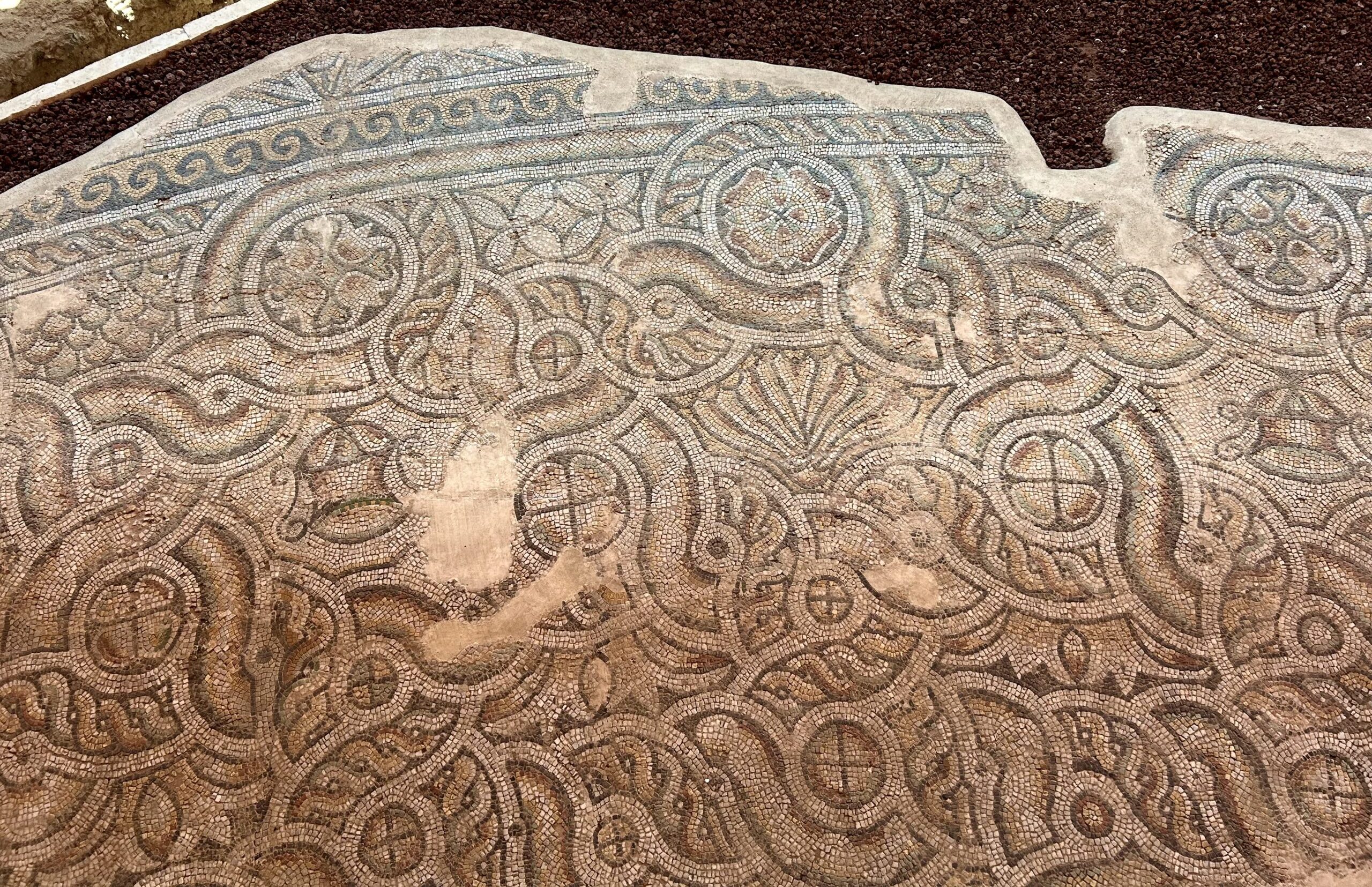
The restoration also included reinforcement that required excavations at the basement of the building. In 2017, while these excavations were going on, a mosaic that belonged to the Late Antiquity period (end of 3rd century A.D. until the 6th or 8th centuries A.D. depending on the region) was discovered. The Istanbul Archaeological Museums Directorate was immediately informed. Archaeologists were able to unearth a large and mostly intact mosaic in the building. It was decided that the findings would be displayed on-site, under a glass covering, instead of being carried to the museum.
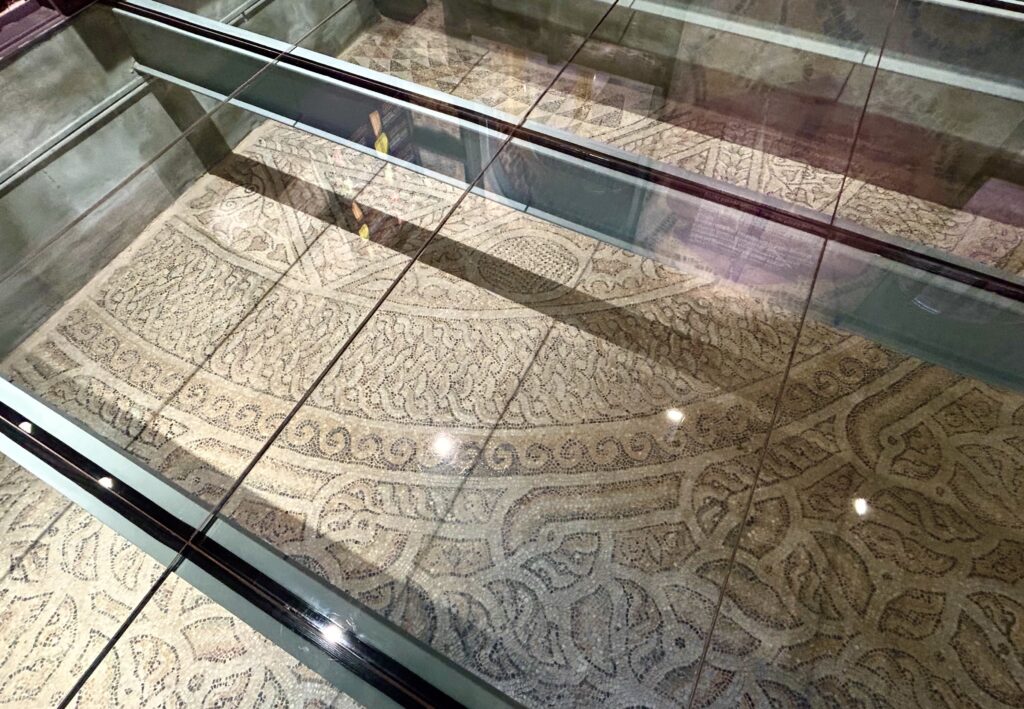
between mid-4th to early 5th century
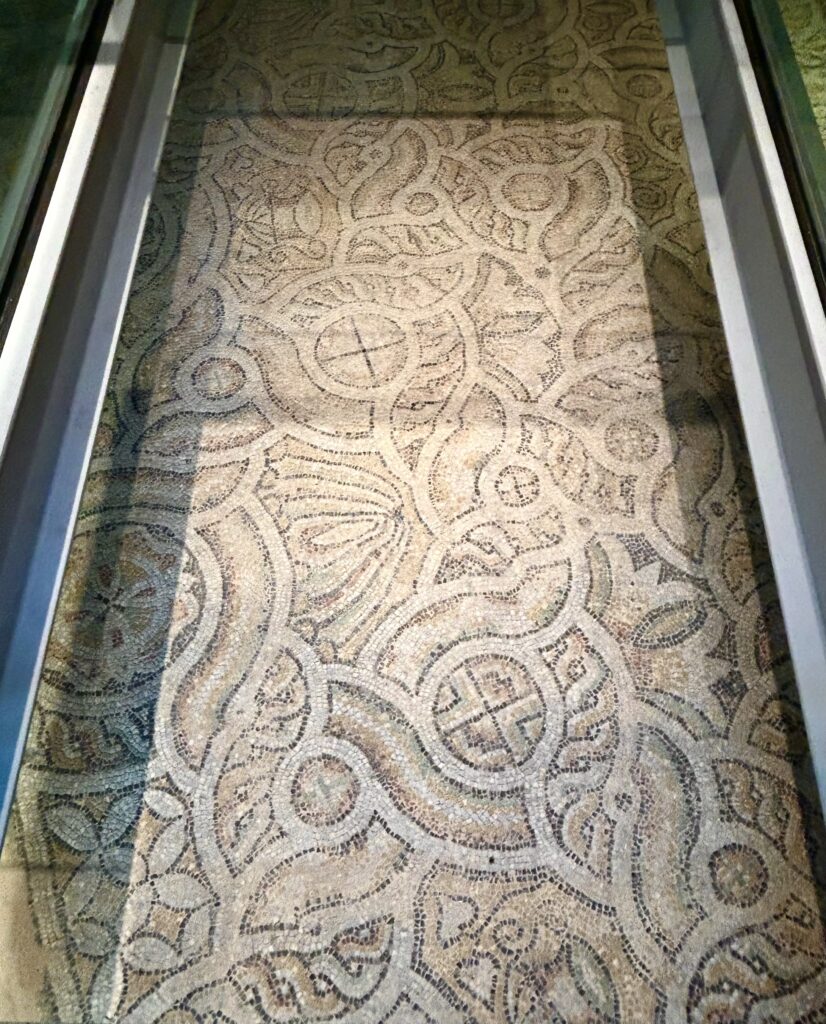
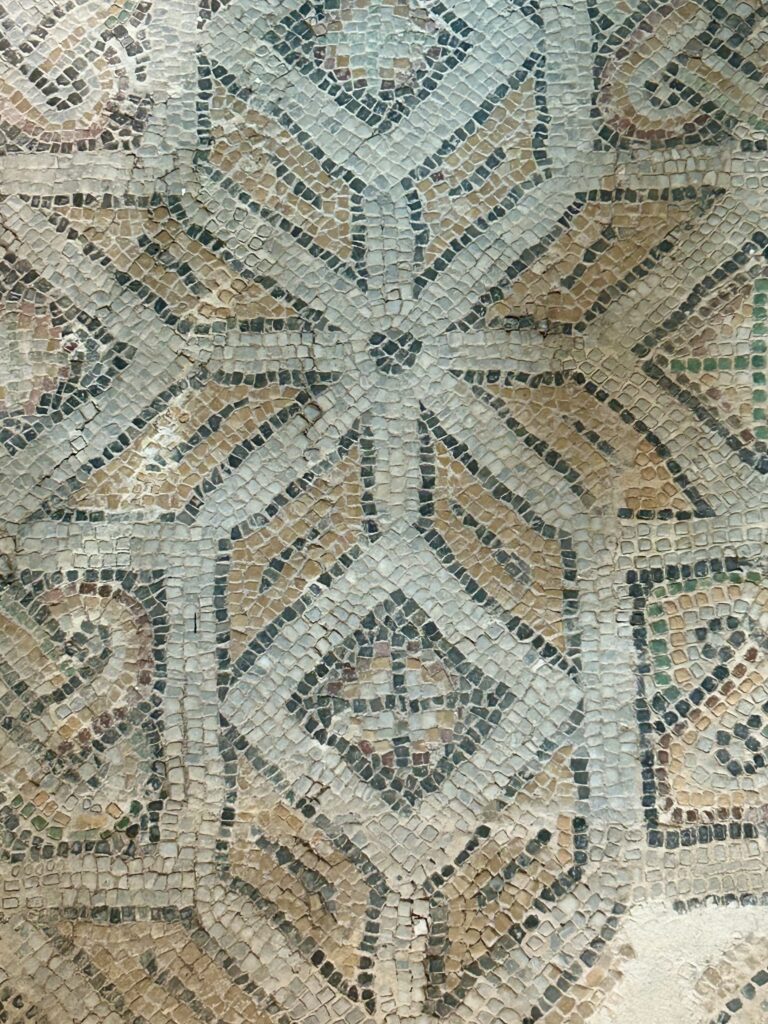
Although at the moment, experts can not clearly state what kind of a building this mosaic piece belonged to, they can date it to a period between mid-4th to early 5th century. The structure that housed it could be a palace, a villa or a castle. Nevertheless, it is considered as an important example of ancient mosaics found outside the city walls.
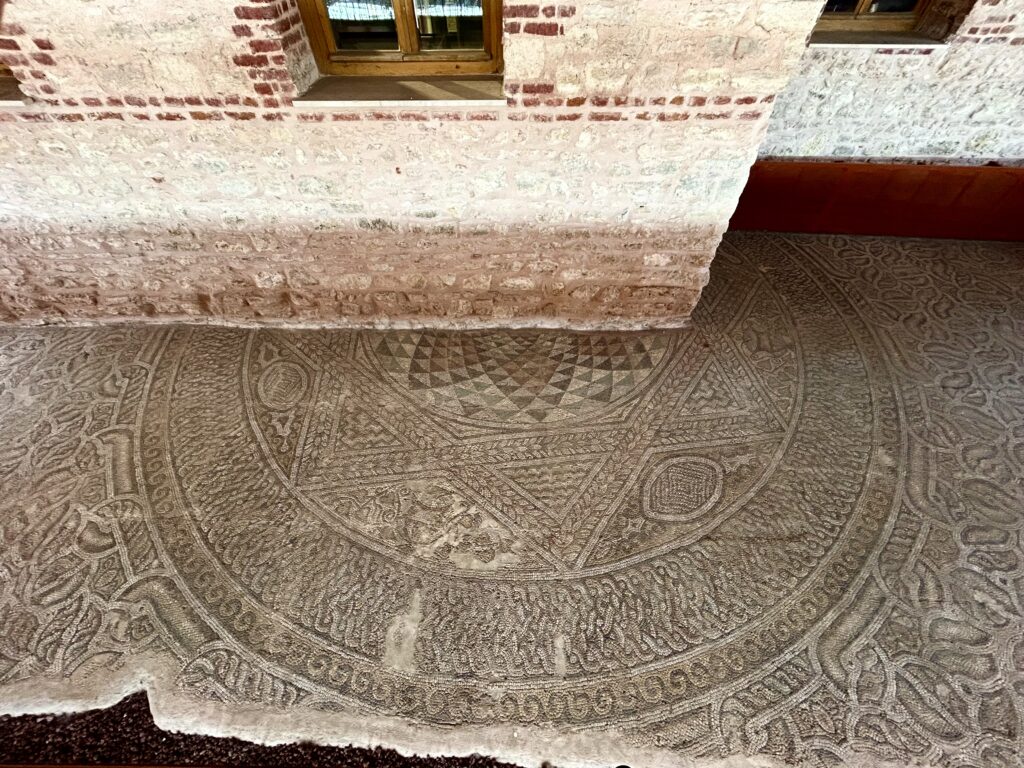
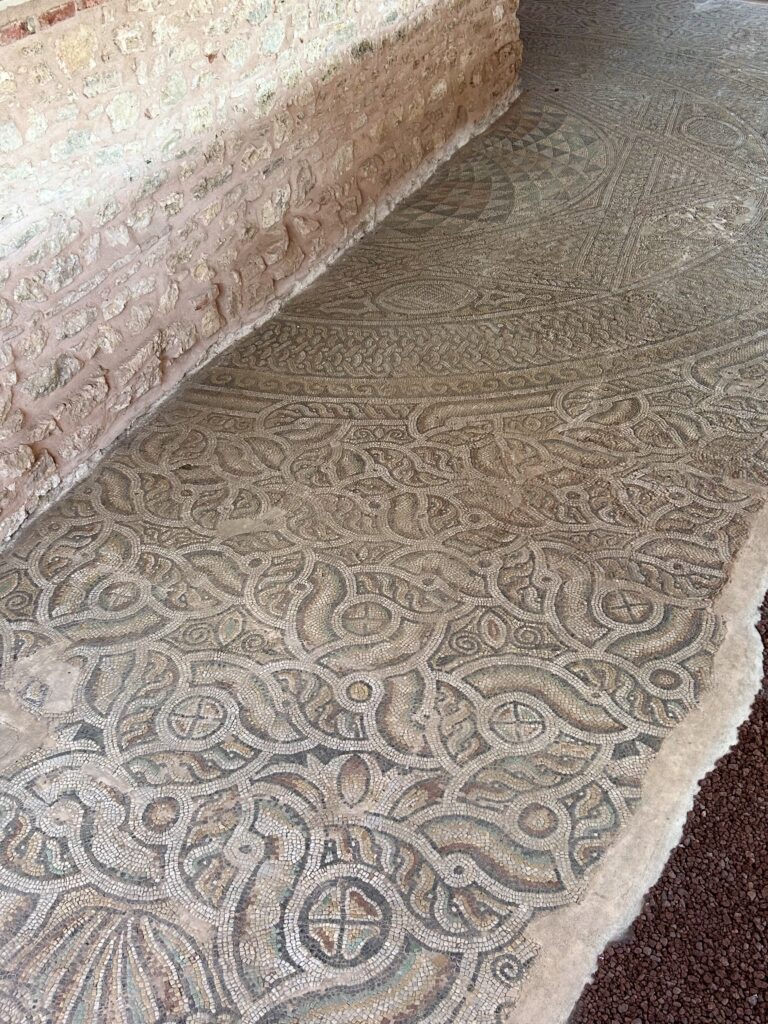
The patterns of the uncovered mosaics inside the building, which are mostly geometrical and floral, led experts to suspect a possible continuation of the finding outside the structure. Further work carried out in the area behind the building was affirmative. The mosaics continued behind the building in the direction of the sea. Be sure to see both parts if you ever visit the museum. Inside, you will not only see the mosaics and the other small findings but also comprehensive information boards about mosaics in general, the different kinds and how they were made.
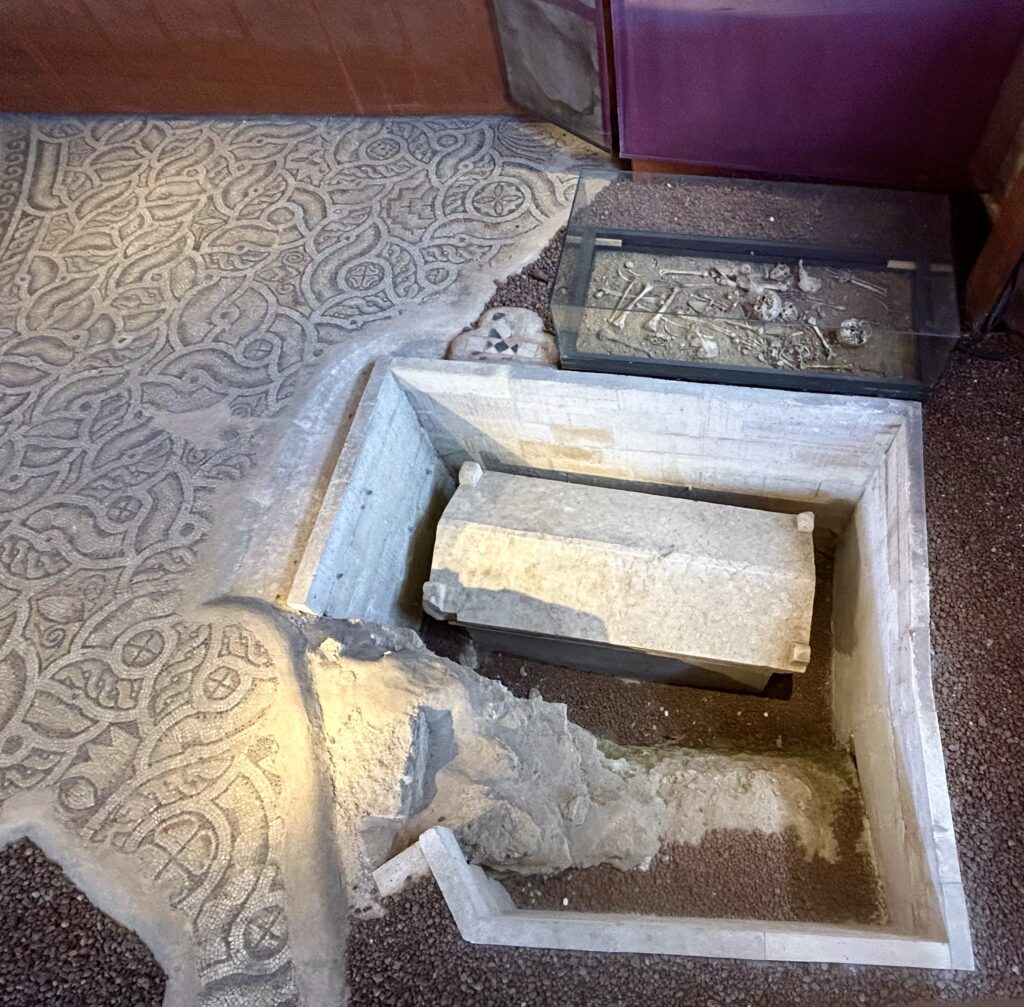
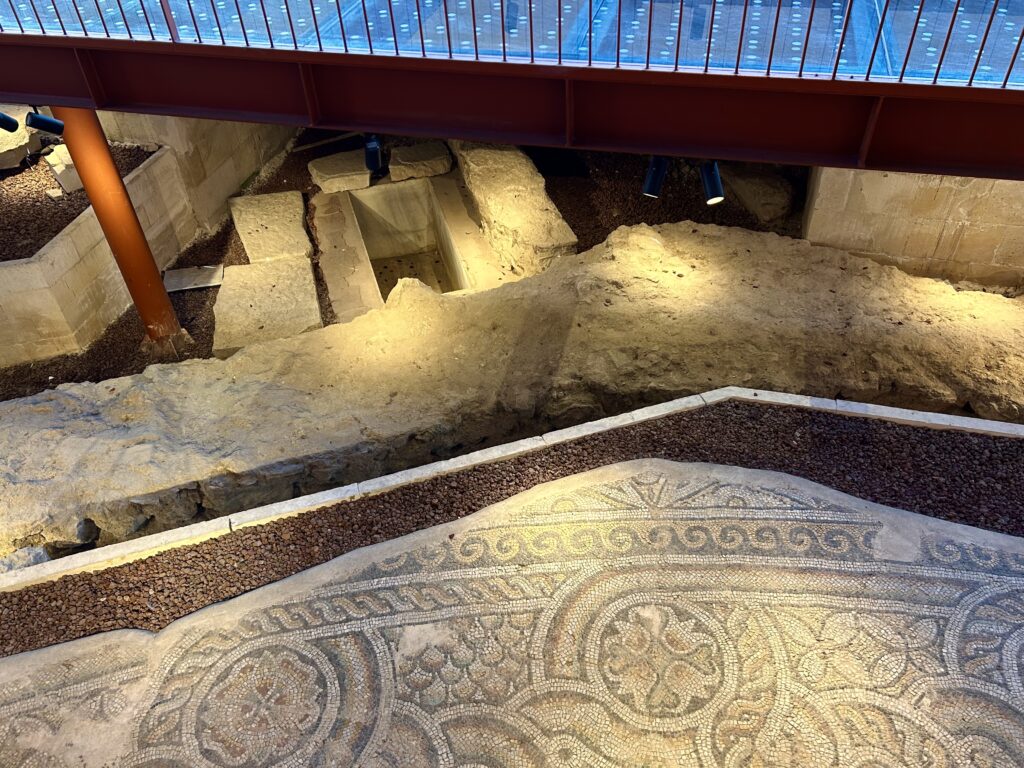
floor can be seen at the back
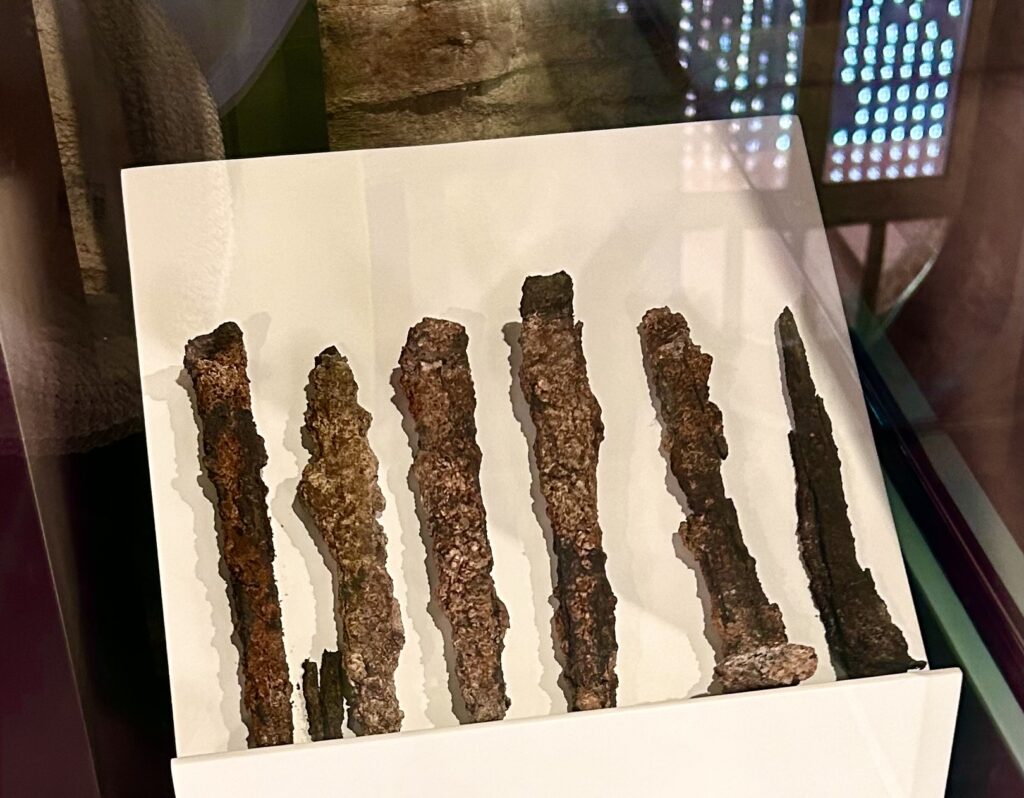
Mosaics were not the only findings on this site. A brick-weave tomb, a sarcophagus, coins dated to the 4th and 10th-11th centuries and some terracotta potsherds were also unearthed. The sarcophagus which was found under the mosaic floor indicates an even earlier date (3rd-4th century). Two human skeletons, one female and the other male, and a purple-coloured velvet fabric with gold glaze were found inside the sarcophagus. The quality and the purple colour of the fabric are interpreted as evidence for the possibility of the couple being descendants of the Imperial family. The fabric was analysed by the Istanbul Archaeological Museums while carbon tests and DNA analysis of the skeletons were carried out by the Middle East Technical University in Ankara. There were no grave goods, neither in the sarcophagus nor the brick-weave tomb. The human remains inside the latter were completely crumbled to dust.
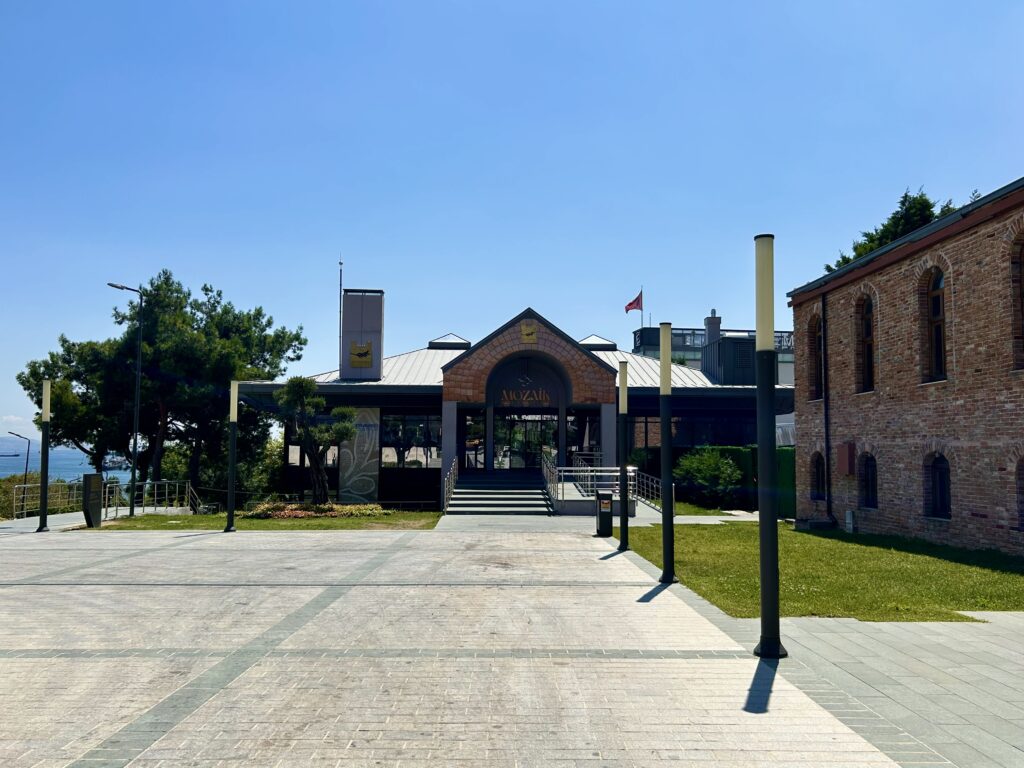
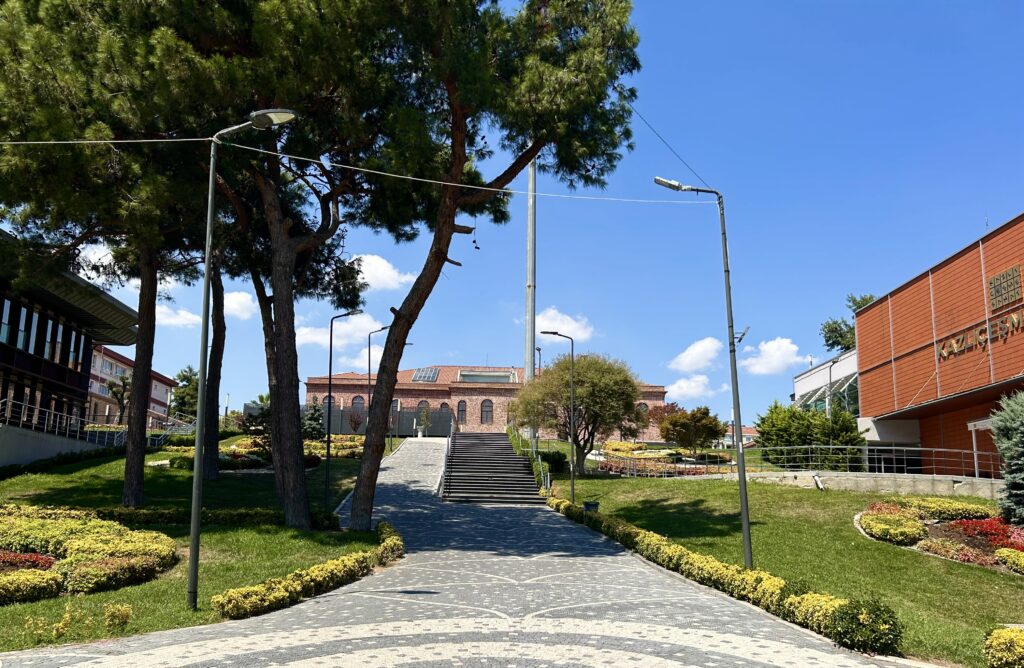
Archaeological excavations were completed in 2019, four years after the initial start of the renovation of the hospital building from the 19th century. The site was re-opened as the Zeytinburnu Mosaic Museum. There is a restaurant on the premises, at the back of the museum. Going down hill, which was probably the area of the above-mentioned vineyard, you will also find a cafeteria on the right where you can have a rest, sip your tea or coffee and enjoy the view.
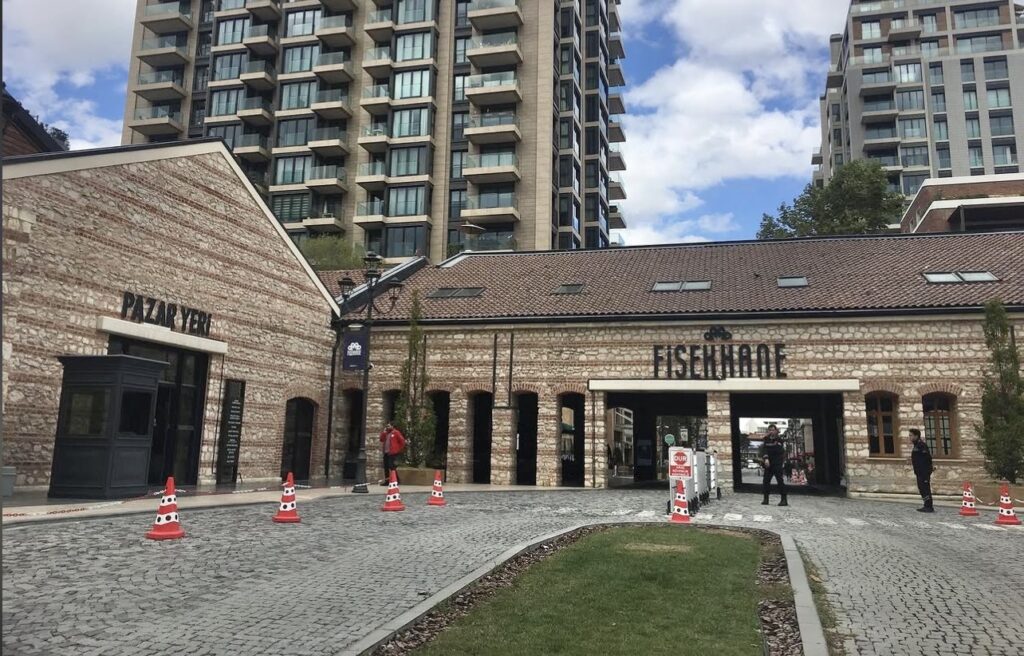
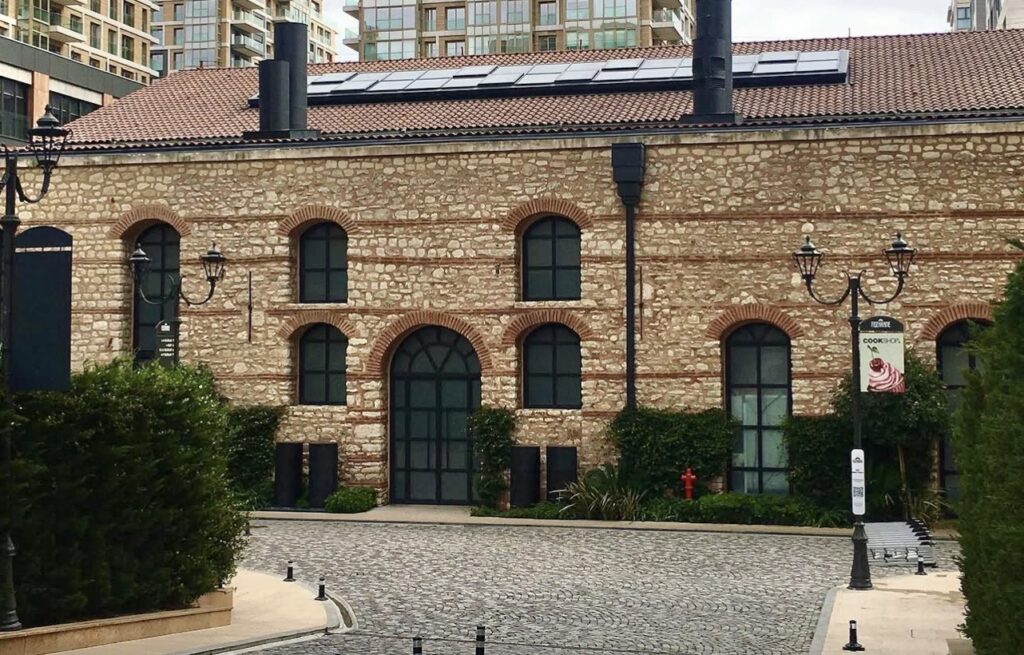
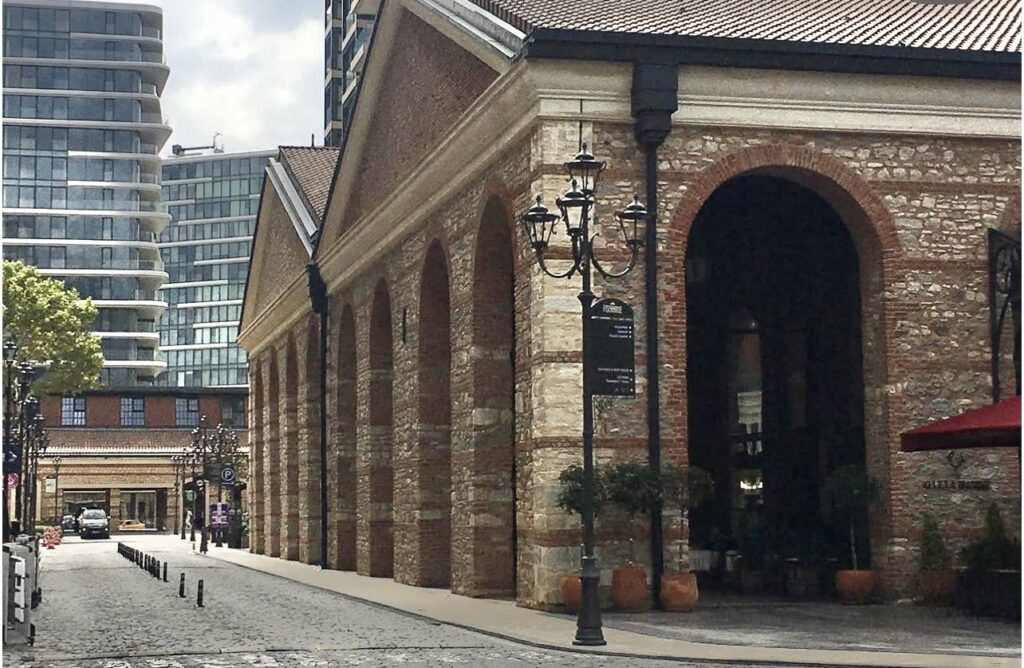
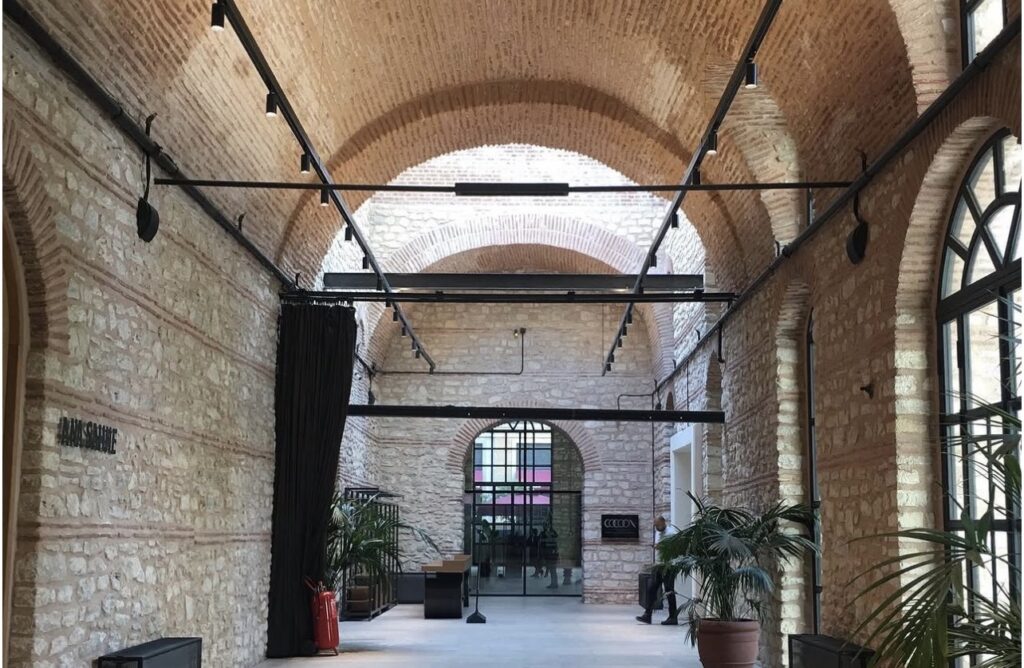
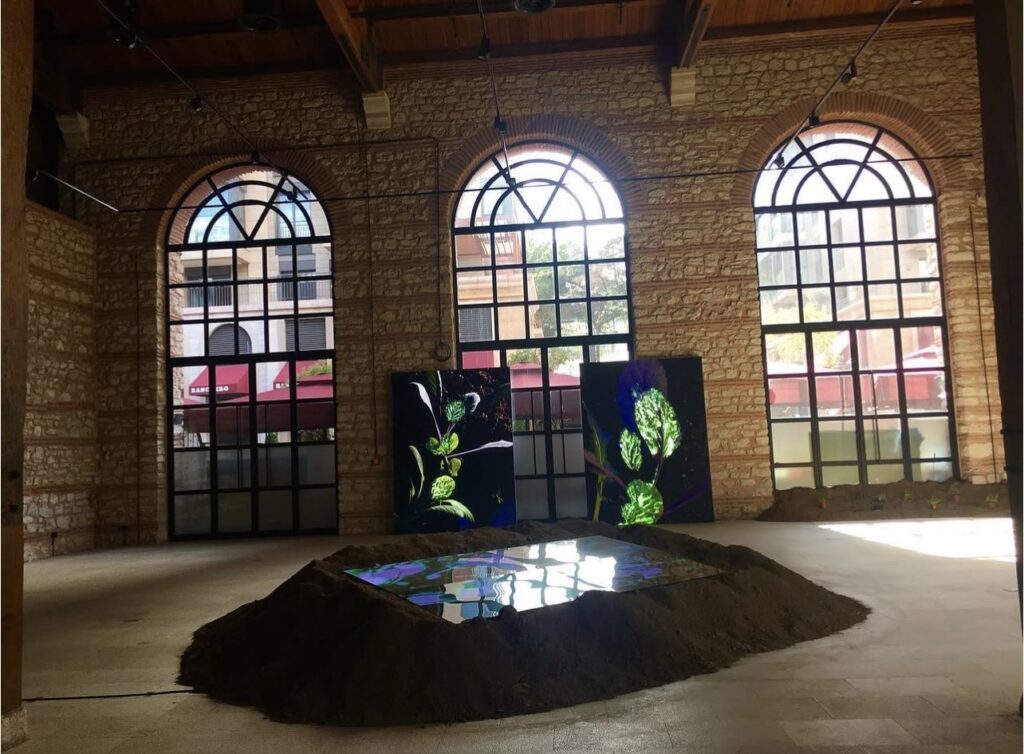
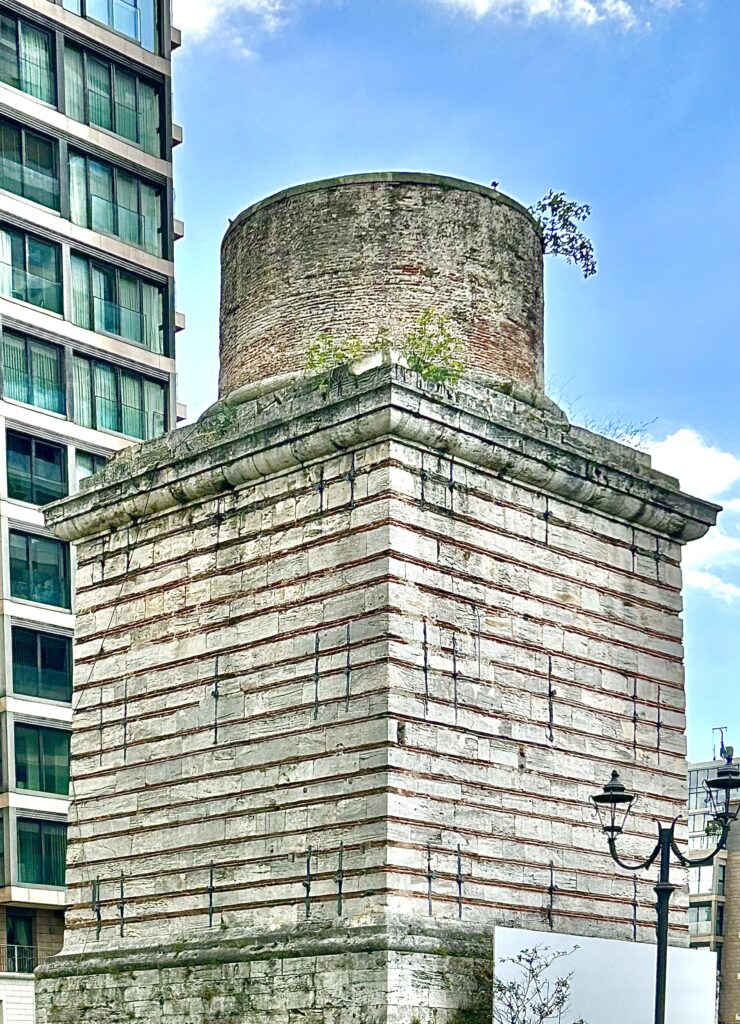
You can combine your excursion to the mosaic museum by visiting another historical site nearby. Actually, it is very close to the Marmaray Zeytinburnu Station that you would most probably be heading to in order to go back to Yenikapı, if you came from that direction. When you leave the mosaic museum’s premises, just turn left, head back to the station and keep walking on the same pavement. Almost across from the station, you will see a renovated historical industrial heritage called Fişekhane. This was a military factory where cartridges (fişek) were produced for the Ottoman army in the 19th century. Built in 1843, it was part of a big military industrial complex called Fabrika-i Hümayun (Imperial Factory) where military equipment including guns, rifles, canons, gunpowder, cartridges etc. were produced. The site also had dormitories for soldiers and a military Turkish bath. Manufacturing ceased by the end of the 1940s and it was completely abandoned in 2015. The complex underwent a thorough renovation and restoration between 2017-2020 and it was turned into an art, culture and entertainment centre. Here, you will find shops, theatres, cinemas, art galleries and exhibition areas in addition to an upscale food court with cafes and restaurants.