You are strolling along the İstiklal Avenue and you are wondering where to and what to eat. Anyone who is visiting Istanbul should definitely spend some time at least once in this area of the city. Being a part of the Beyoğlu district, the İstiklal has been the art and culture hub of the city for more than almost 200 years. (For a brief history of the İstiklal Avenue, I recommend you to read another post on this site: Looking for a Decent Pub around Beyoğlu? The post which can be accessed by clicking on the link is also relevant to my current post.)
When you are in the İstiklal Avenue area as a foreigner, it is perfectly understandable that you feel overwhelmed by the numerous restaurants and cafes that are lined up on both sides. What is more, there many others in the side streets as well. As you can imagine, some are definitely tourist traps and not necessarily places that locals prefer to eat at. There are also some branches of restaurant chains that serve standard international plates with maybe just a few local touches on the menu. So where should you experience the different aspects of the Turkish cuisine? Where do Turkish people have lunch or dinner when they want to have traditional food? The purpose of this post is to name a few of such places. Needless to say, there are many more. This will just be a glimpse of the quest. Other posts on the subject will follow.
Contrary to the general superficial notion, The Turkish cuisine does not consist of only kebabs. It is far more sophisticated and rich in variety. Having ruled for centuries more than 20 ethnic groups under four religions and across an area ranging from the Balkans to Caucasia, Crimea, the Middle East and North Africa, it is a fact that the Turkish cuisine has both influenced and been influenced by all of these cultures. At the time, it was expected that the best plates and delicacies from all over the realm be brought and introduced to the capital and especially to the Sultan’s palace. This has mostly been the case for other empires throughout history too, although there are also some exceptions. Therefore, in the Turkish cuisine case, it is no wonder that today several nations claim certain dishes to be their own. The impartial approach would be to taste the specific acclaimed dishes and make a comparison. It will be exciting to find out that, although the names of certain dishes resemble or are even the same, the outcome can be completely different because of the adaptation to the local taste.
If you intend to buy Turkish Delights and take them home, Ali Muhiddin Hacı Bekir is the right place for you. Beware of cheaper but low-quality brands that you will encounter all over the city. Established in 1777, Hacı Bekir is the establishment that the delicacy lokum owes its English name, Turkish Delight. It is said that, in the 19th century an English customer took Hacı Bekir’s lokums to England and named them as Turkish Delight. So, that is how they became globally known by that name. The fame of Hacı Bekir’s sweets, lokums and desserts naturally reached the palace of Sultan Mahmut II who appointed him as the Chief Confectioner to the Palace and awarded him with a first-degree medal of honour, the Nişan-ı Ali Osmani.
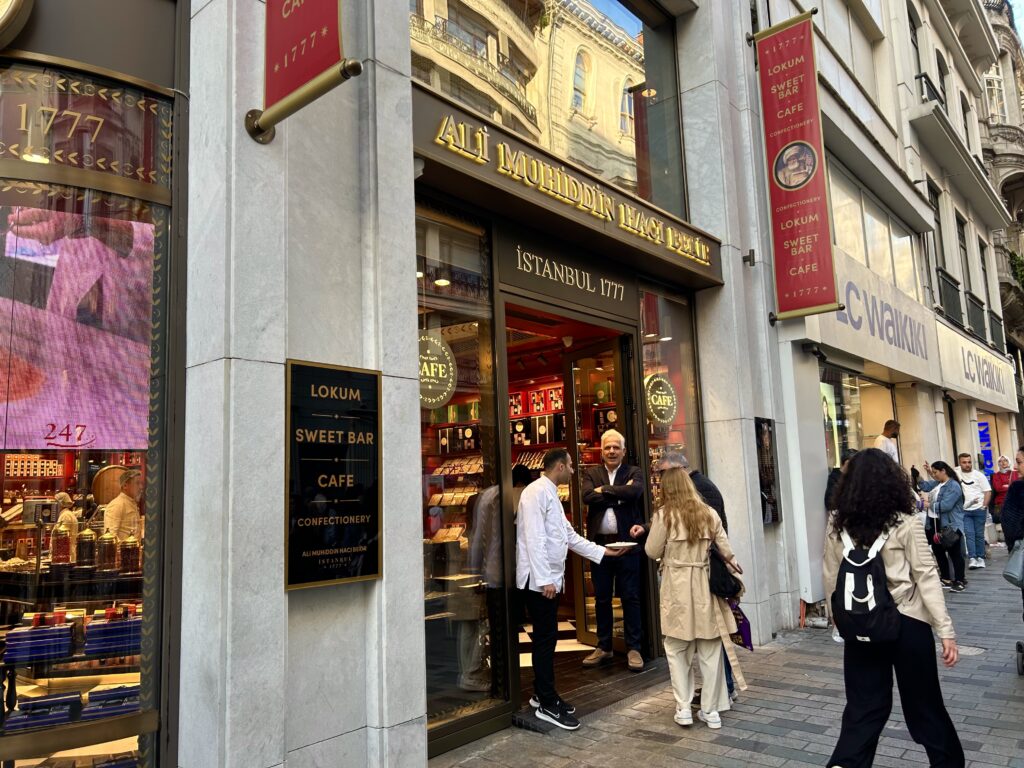
One of their two shops on the İstiklal Avenue
The original Hacı Bekir shop was in Eminönü. Today they have other branches across the city. Some of the shops also have cafés. (There are two shops on the İstiklal Avenue, at numbers 83 and 72A.) Apart from the Turkish Delight, you can try the helvas, almond pastes (similar to marzipan but with less sugar) and a variety of sweets. Notably, there is the Akide which is produced in several flavours. It is a special Ottoman sweet that takes its name from the Arabic word akit, meaning agreement. At the time, the Ottoman janissaries were given quarterly salaries with a special ceremony in the presence of the Sultan. In addition to the salary, they were also offered the Akide sweets as a symbol of the agreement between the Sultan and the janissaries. The agreement would indicate the mutual satisfaction of the two parties and the loyalty of the janissaries. If you are visiting Istanbul in winter, do not forget to try sahlep, a traditional hot beverage that is made of orchid bulbs, at Hacı Bekir as well. (For more information about sahlep, you can read my post, Orchids to Drink… Sahlep, My Favourite Hot Drink in Winter… by following the link.)
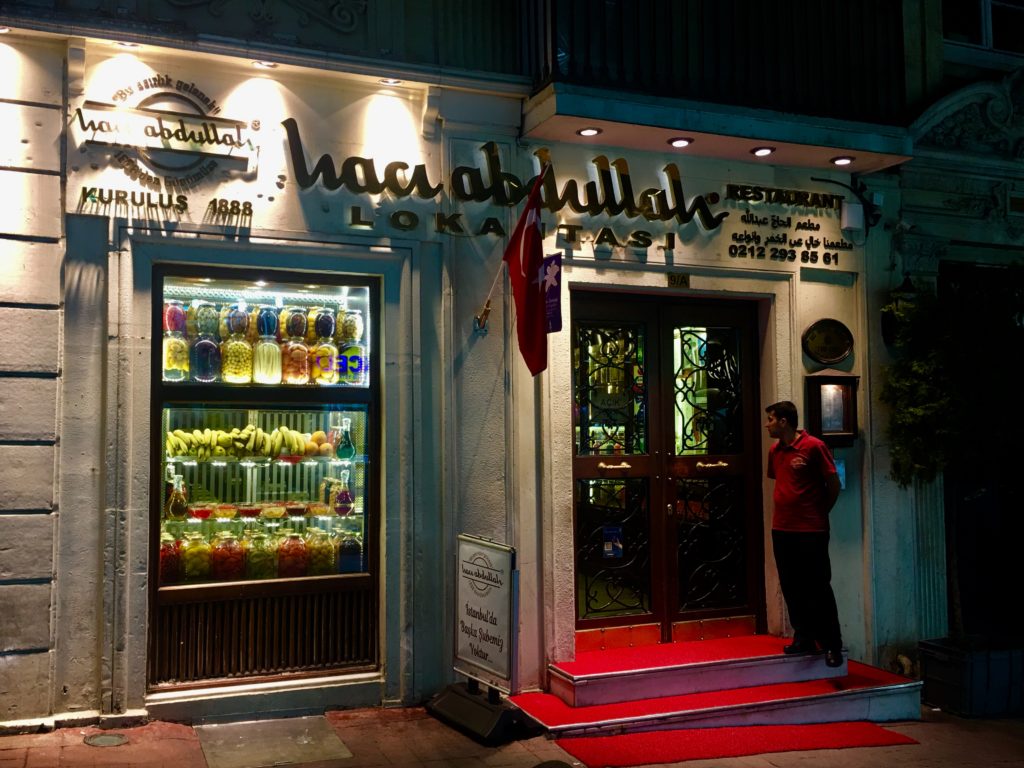
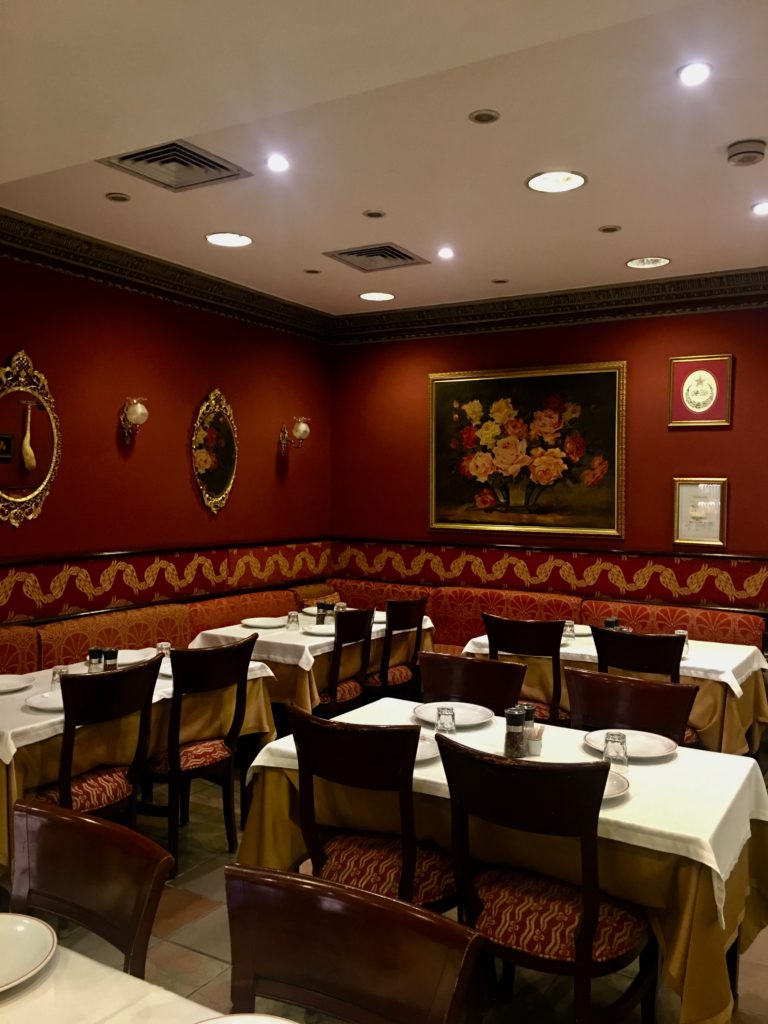
There are two famous restaurants in the area that will give you an idea of what type of traditional dishes locals normally eat in their daily lives. The first one is the Hacı Abdullah Lokantası which was established in 1888. Just off the İstiklal, at Atıf Yılmaz Sok. No:9/A, you will find a wide selection of meat and vegetable dishes, pickles, salads, compotes and desserts. There is detailed information on the Hacı Abdullah Restaurant in a previous post, Hacı Abdullah: A Historical Gem of Turkish Cuisine in Beyoğlu. Reservations can be made only by telephone. You can also take your chance by just dropping by.
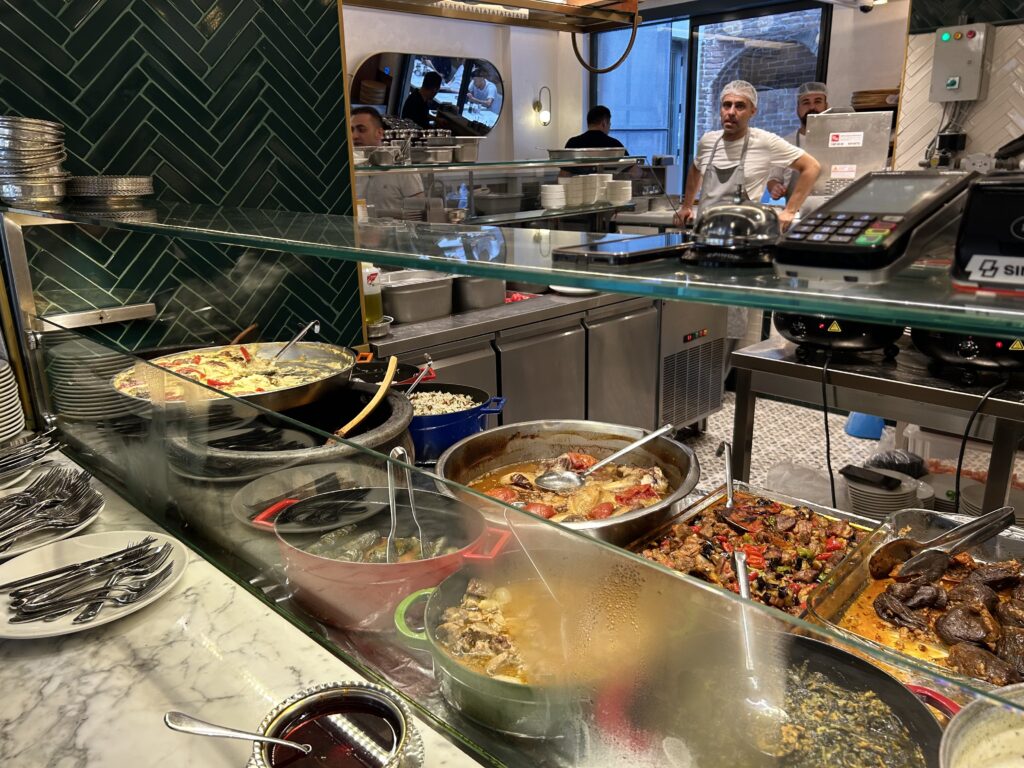
or select from the counter
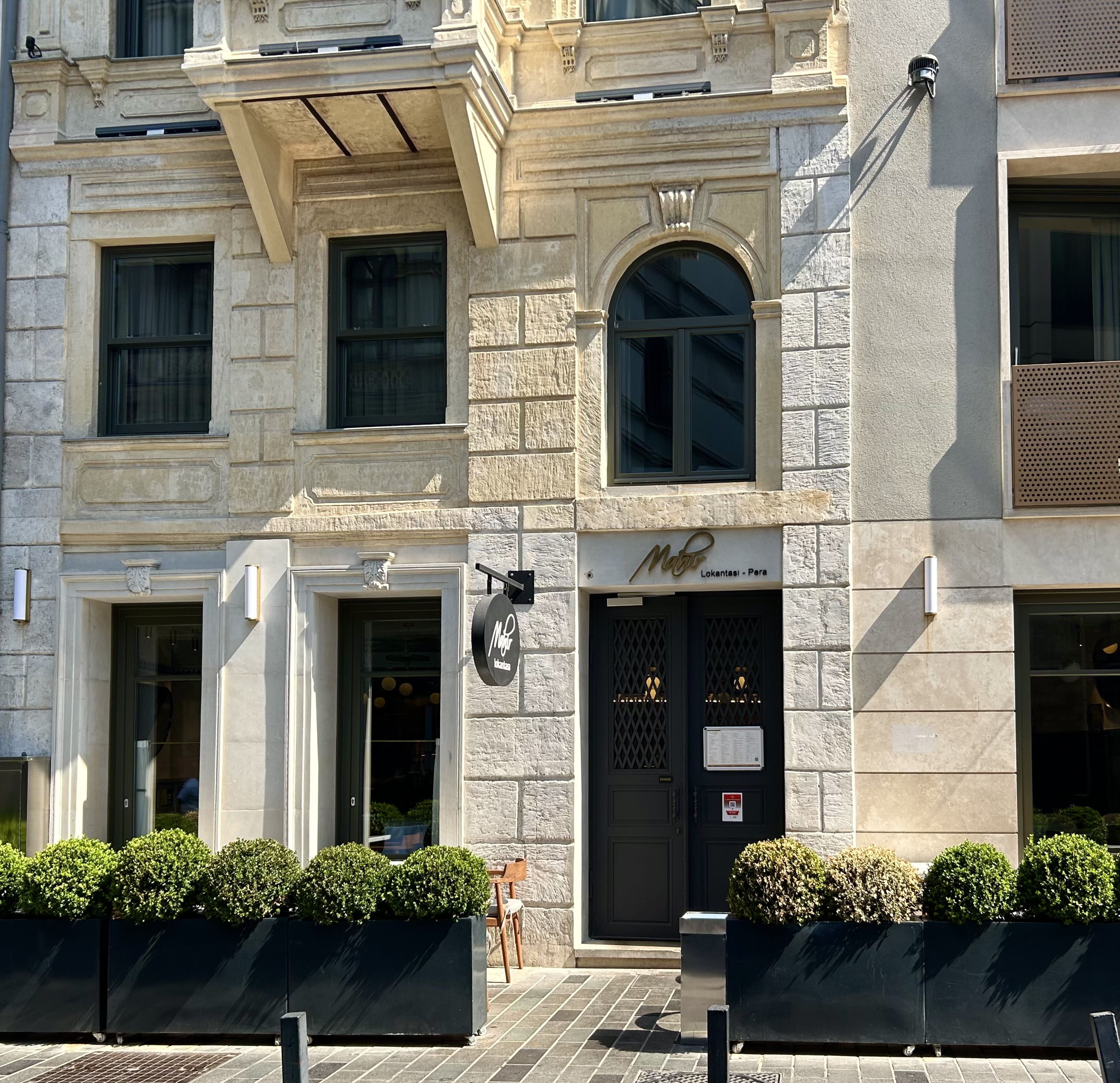
A similar restaurant in the area is the Mahir Lokantası. It was established 10 years ago at Tavukçu Fethi Sok. 28/B Osmanbey in the Şişli district. Although not very far from Beyoğlu/Taksim by metro, this location is more convenient if you are in the Nişantaşı or Osmanbey area. However, the good news is that, the restaurant recently opened a branch in Beyoğlu as well. It is on the Meşrutiyet Caddesi (a meandering but almost parallel avenue to the İstiklal Avenue) at Number 33. Very easy to find with a navigation app. The restaurant is open between 12-10 p.m. and does not take any reservations. You just have to wait in the queue to be seated. Waiting is very much worth it but, you can even prevent that by avoiding the regular lunch or dinner hours.
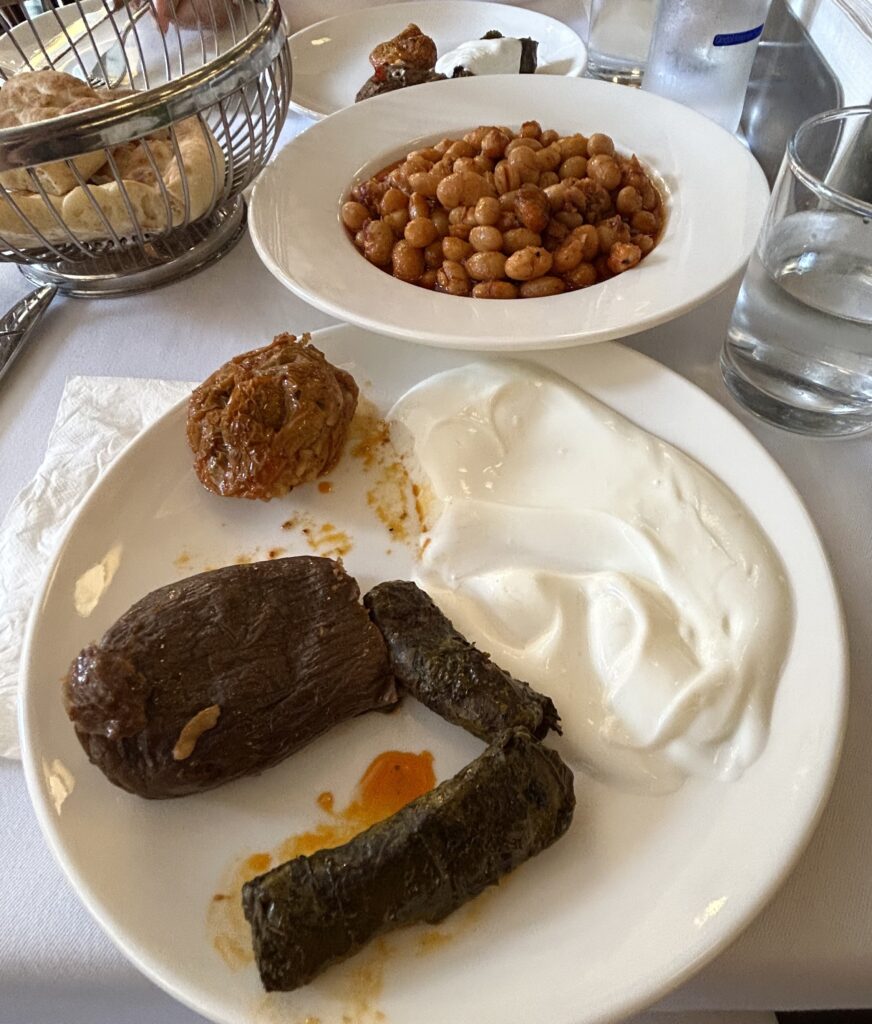
Etli Kuru Fasulye (Haricot Bean Stew)
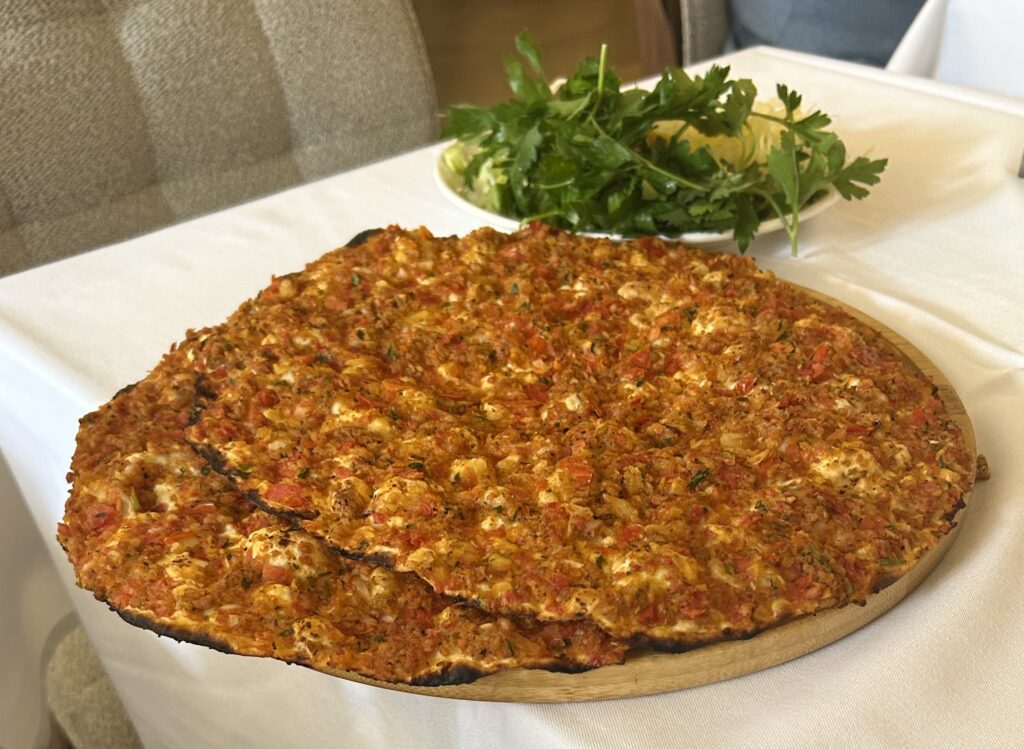
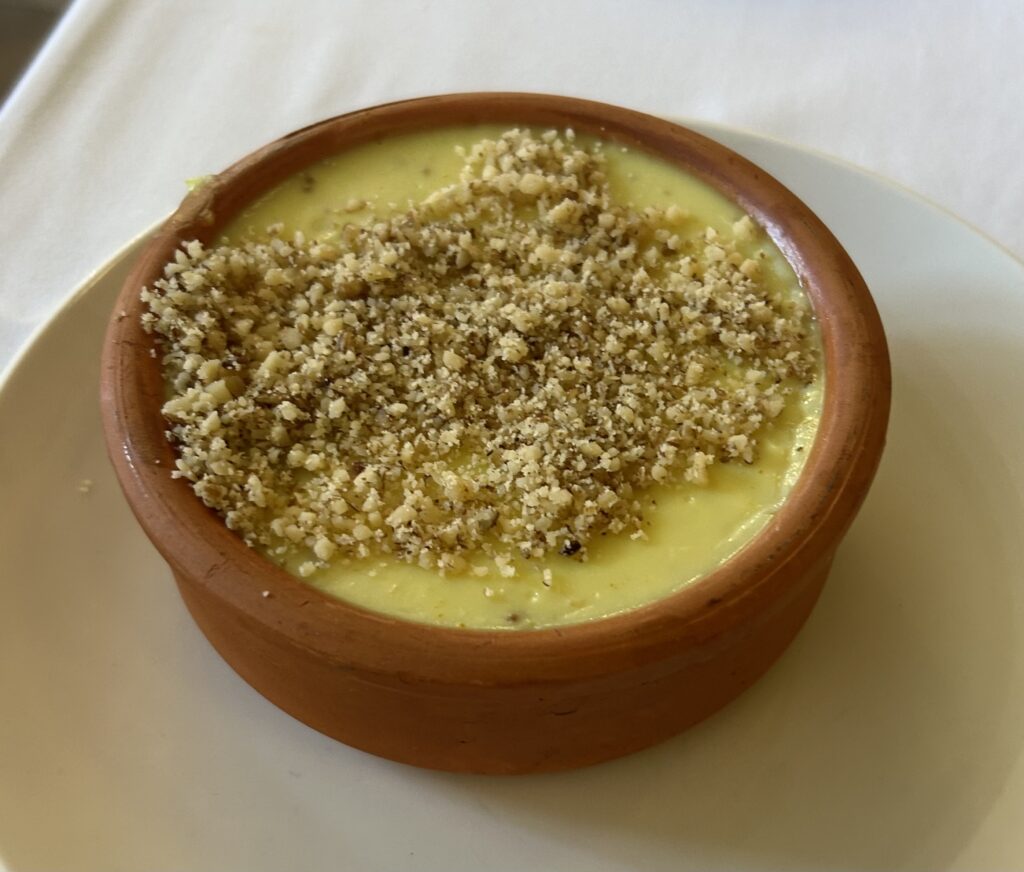
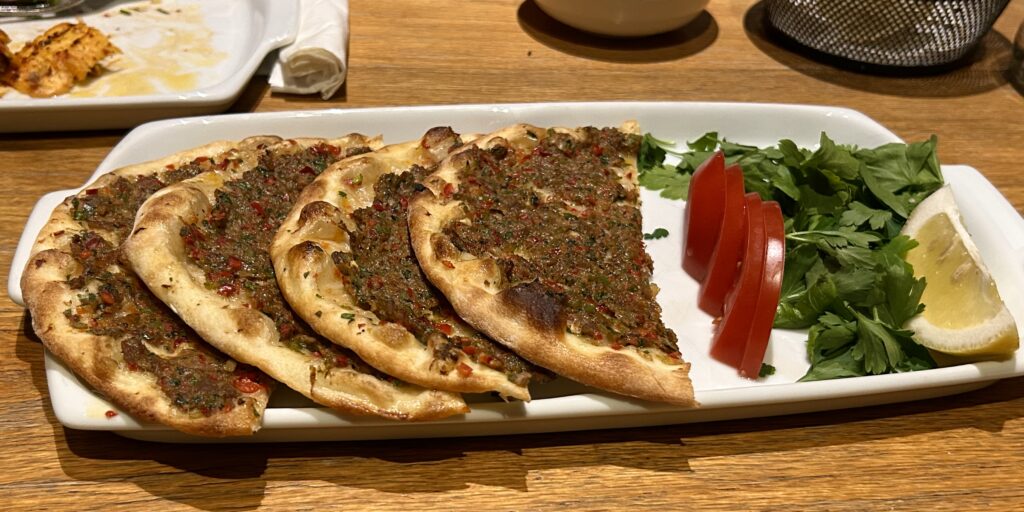
The nice thing about Mahir Lokantası is that there are both kebabs and traditional Turkish casserole or pot dishes on the menu. You can choose either from the counter or from the menu and make a combination from a rich variety of soups, kebabs, grills main courses of meat and vegetables and desserts. They all taste exceptionally well. The crisp Lahmacun with its very thin base is highly recommended. Other specialties that you can try are hot or cold Dolma dishes (Sarma can sometimes be used as a synonym as well), Hünkarbeğendi (made with diced lamb meat and served on aubergine and cheese sauce, the direct translation of the name of this dish is “The Sultan Liked It”), Musakka (not exactly the same as Greek Musakka which is also very delicious), İzmir Köfte (Smyrna Meatballs) and Etli Kuru Fasulye (Haricot Bean Stew, a very popular dish among Turkish households and best eaten with pilaf). (Follow the link for another place that is famous in town for its Haricot Bean dish.) If you are too full for the desserts such as Kadayıf, İrmik Helvası (a Turkish semolina dessert) or the Kabak Tatlısı (oven-baked pumpkin with syrup and crushed walnuts on top), you can go for the milk-based desserts such as Sütlaç or Keşkül. Please note that the menu may vary daily and seasonally according to the availability of fresh ingredients. Neither the Hacı Abdullah nor the Mahir restaurants serve alcoholic beverages.
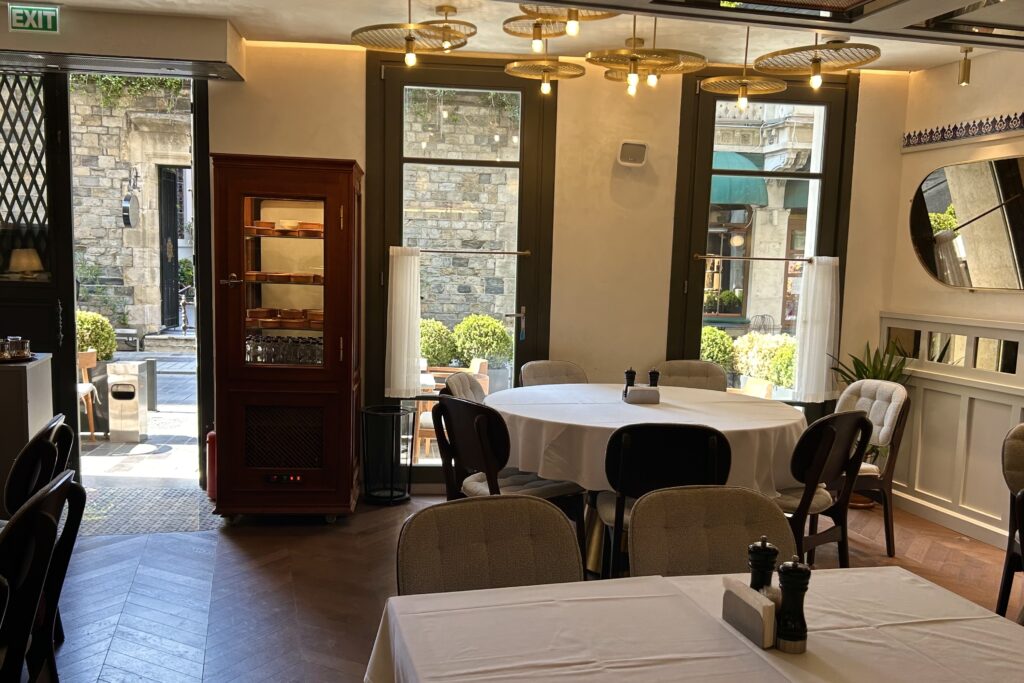
Chapelle Restaurant right across the street where you
can enjoy a cup of coffee or tea.
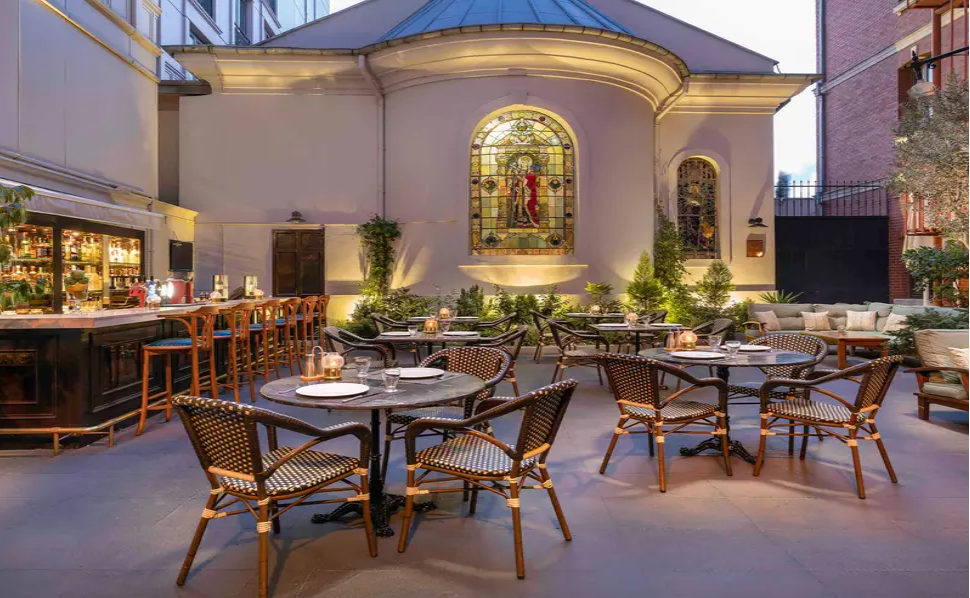
If weather permits, you can have your coffee or tea at the courtyard of the Chapelle Restaurant (which is a part of the Rixos Pera Hotel), across the street from Mahir Lokantası. One side of the courtyard is bordered with the apse of the St. Helena Church that is within the compound of the British Consulate General in Istanbul. The restaurant has a magical ambience in the twilight and dark hours with light reflecting from inside the church on the stained-glass decoration of the apse. The church which is for the use of the Consulate only was built in the 19th century to serve the British Embassy of the time and dedicated to the mother of Emperor Constantine I. It was very badly damaged during the bombing of the Consulate General by Al Qaeda in 2003 and had to be rebuilt.
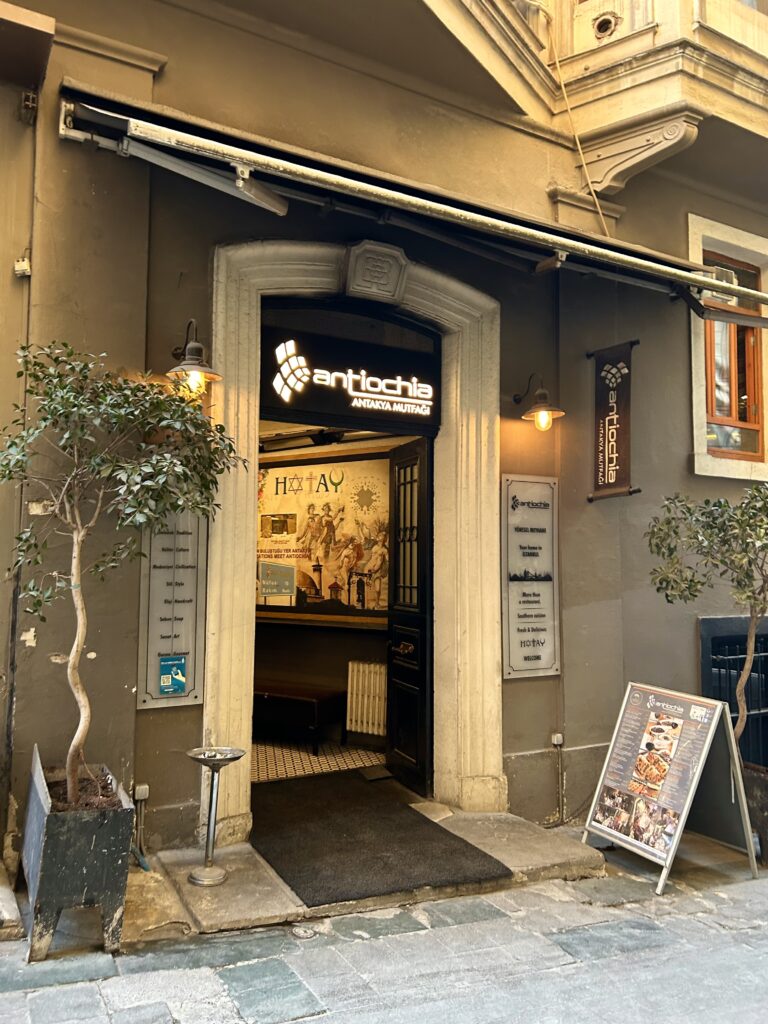
The Antiochia Restaurant at General Yazgan Sk. No:3 near Tünel, is a very special restaurant. Therefore, making a reservation before going would be wise. Antiochia (or Antioch) was the name of Antakya in antiquity, a city in the south of Turkey, flanked by Syria from the east and south, and the Mediterranean Sea on the west. It was founded in 300 B.C. by Seleucus I Nicator. He was a former general of Alexander the Great and gained power after his death and founded the Seleucid kingdom. Being at the end of the caravan routes that carried goods from Asia, Persia and the Far East to the Mediterranean, Antakya was always an important crossroad in history. It is therefore no wonder that Antakya is home to different religions and ethnic groups to this day. It is considered as one of the oldest centres of Christianity because it was the missionary headquarters of St. Paul between 47-55 A.D. and it is also said to be the place where the followers of Jesus Christ were first named as Christians. Today, Antakya is one of the rare Anatolian cities that still has considerable Christian, Jewish and Muslim congregations living side by side. Unfortunately, together with 10 other cities in the area, Antakya was the victim of the great earthquake on February 6th, 2023. The inhabitants are still struggling to return to a normal life.
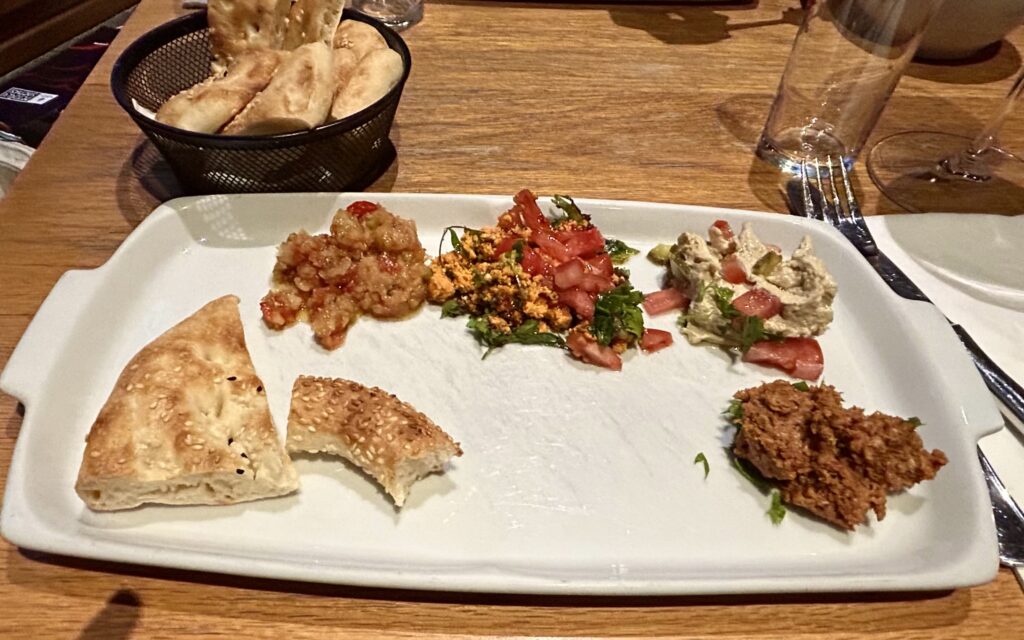
Antakya Simit (served with cumin, salt and sesame)
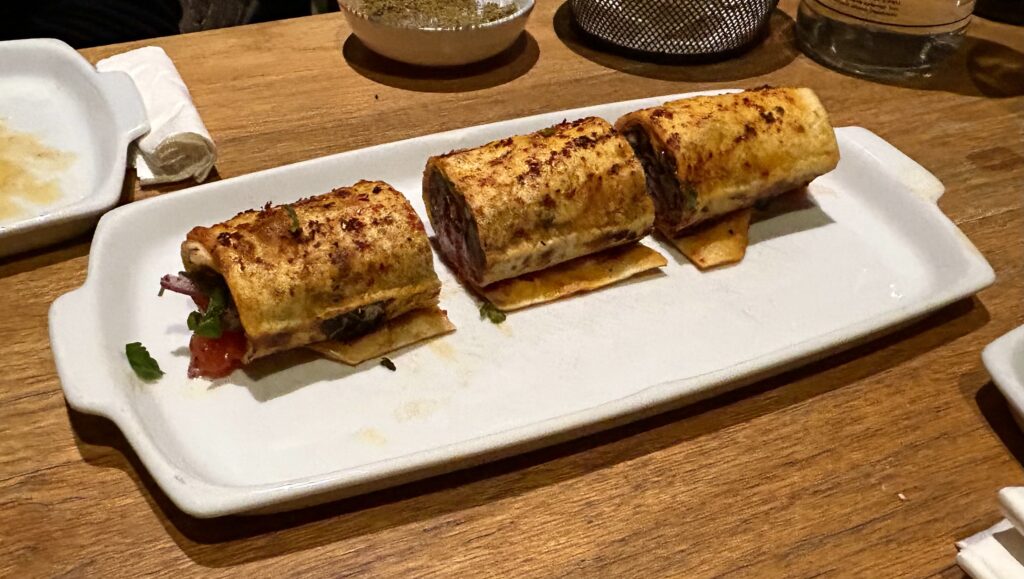
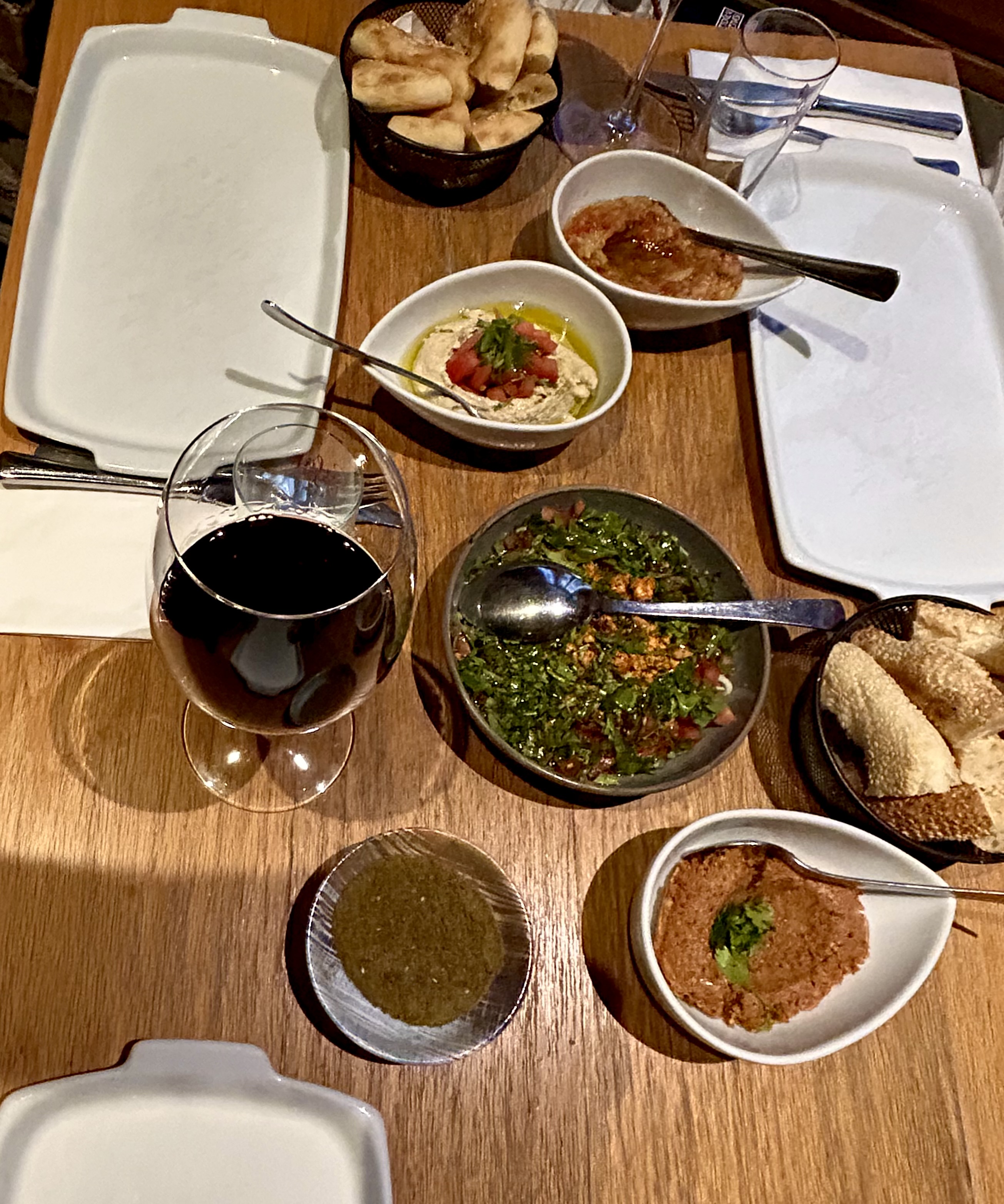
The historic, cultural and religious richness of Antakya is no doubt the foundation of its exquisite cuisine. It is one of the few hubs in Turkey of a remarkable gastronomy with distinct characteristics of its own. Luckily, in Istanbul you have the chance of making acquaintance with Antakya’s tastes and the Antiochia Restaurant is a perfect destination for this purpose. It is not just the menu but the ingredients (such as olive oil, meat, sour pomegranate sauce and special spices) that are supplied directly from Antakya as well that make this restaurant outstanding. You can taste the typical Antakya cuisine here while sipping Turkish Rakı or Turkish wines some of which are made of the endemic grapes of the region. Abagannuş, Humus, Muammara, Lahmacun, special Antakya Simit (served with cumin, salt and sesame), a variety of veal, lamb, poultry and vegan main dishes are for you to taste among many others. You can get plenty of help from the waiters for a thorough selection from the menu. Whatever and how much you decide to eat, leave room in your stomach for the desserts. Crisp pumpkin (served with grated walnut and tahini) and lukewarm Künefe (with special cheese from the region) are definitely worth a try with Turkish tea or coffee to your liking.
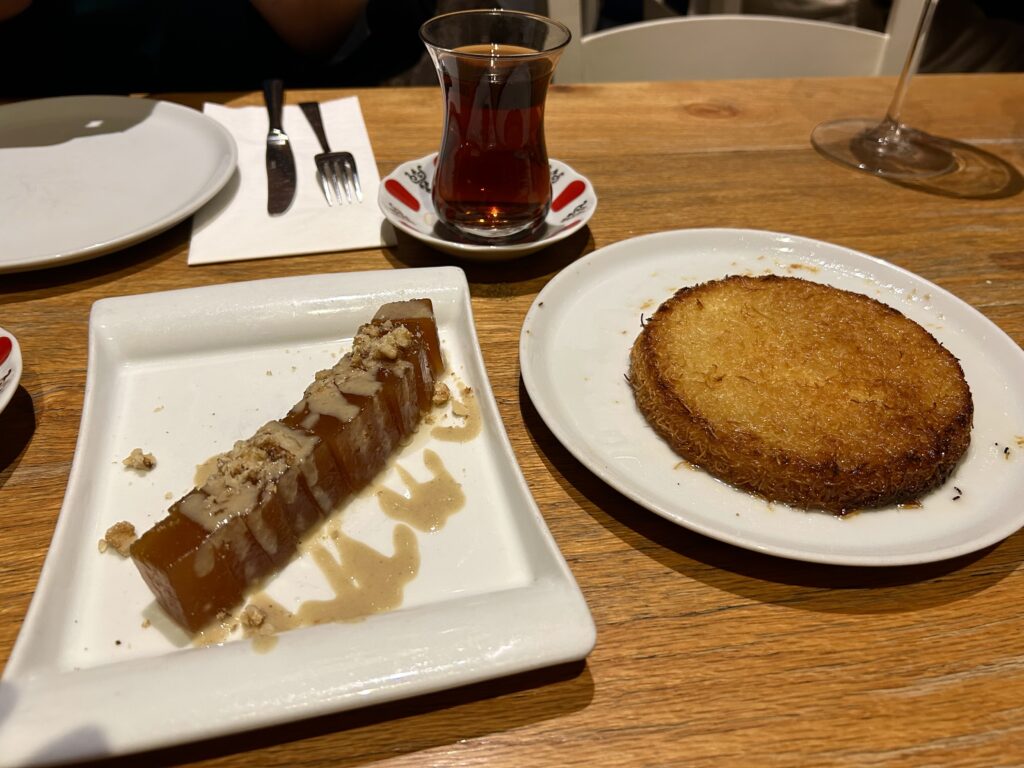
Künefe on the right
Antakya İşi Sokak Lezzetleri (at Sahne Sk. No:18/A) is another restaurant that offers good quality Antakya cuisine, grills and street food under one roof. The street and a few adjoining others are actually known as the Historical Fish Market (Tarihi Balık Pazarı) of Beyoğlu. Unfortunately, the area that was once full of fish mongers has now been invaded by all kinds of irrelevant shops and restaurants. However, few of them still remain.
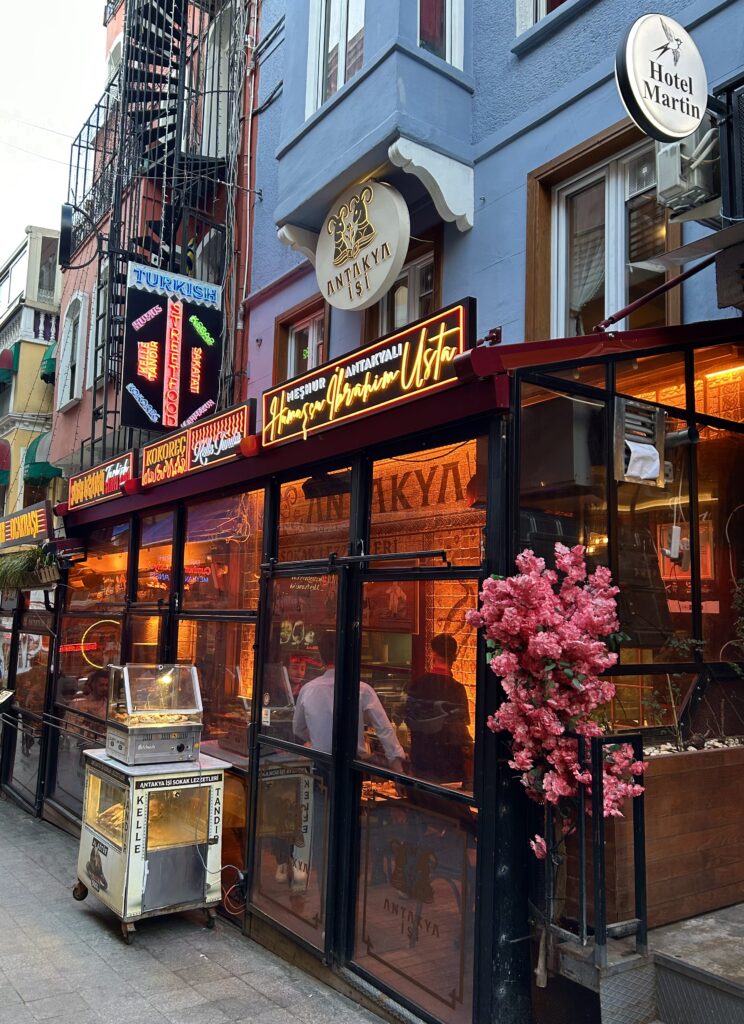
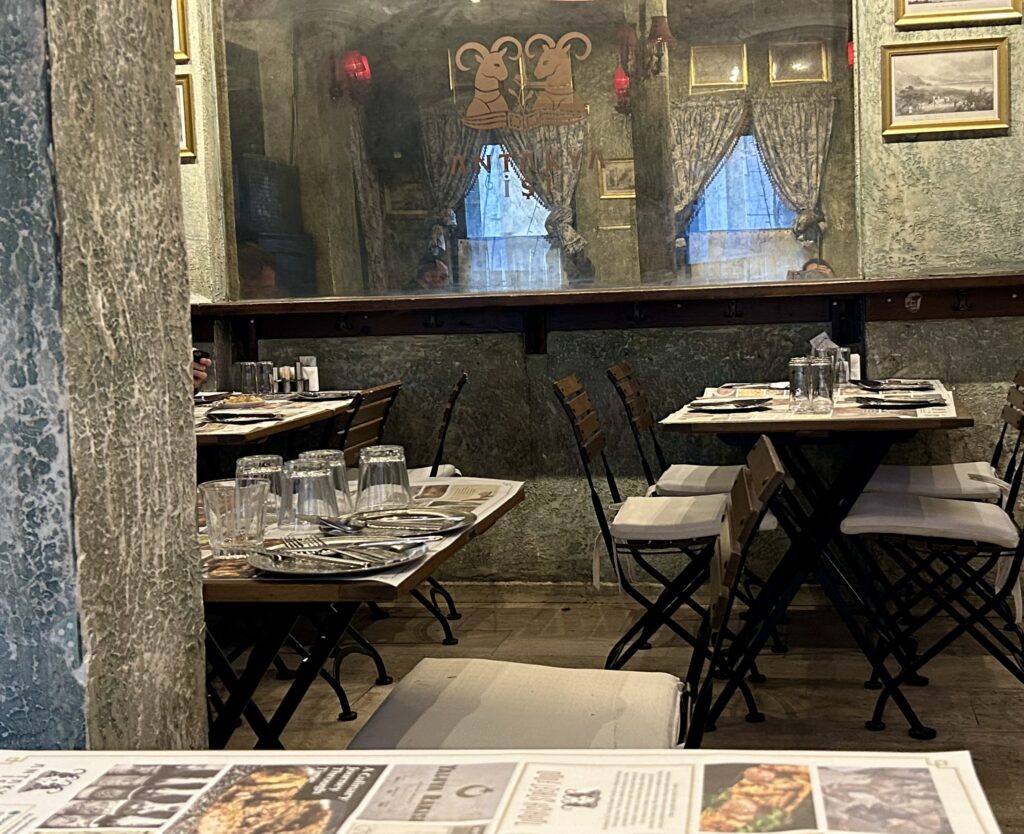
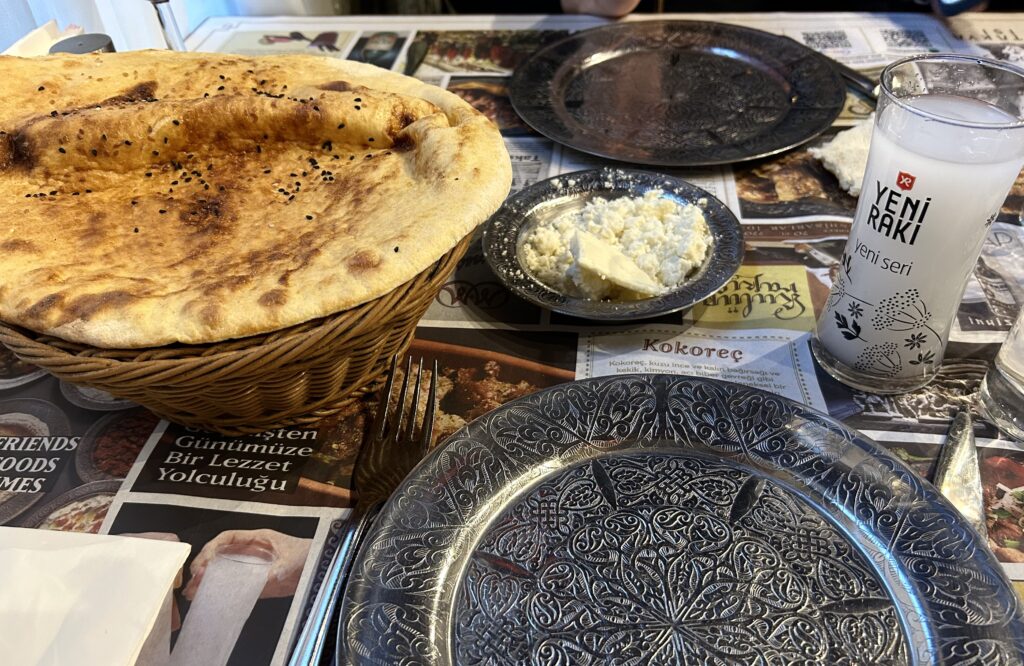
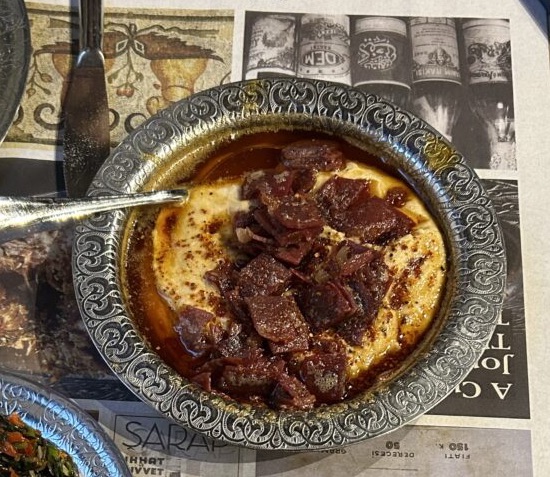
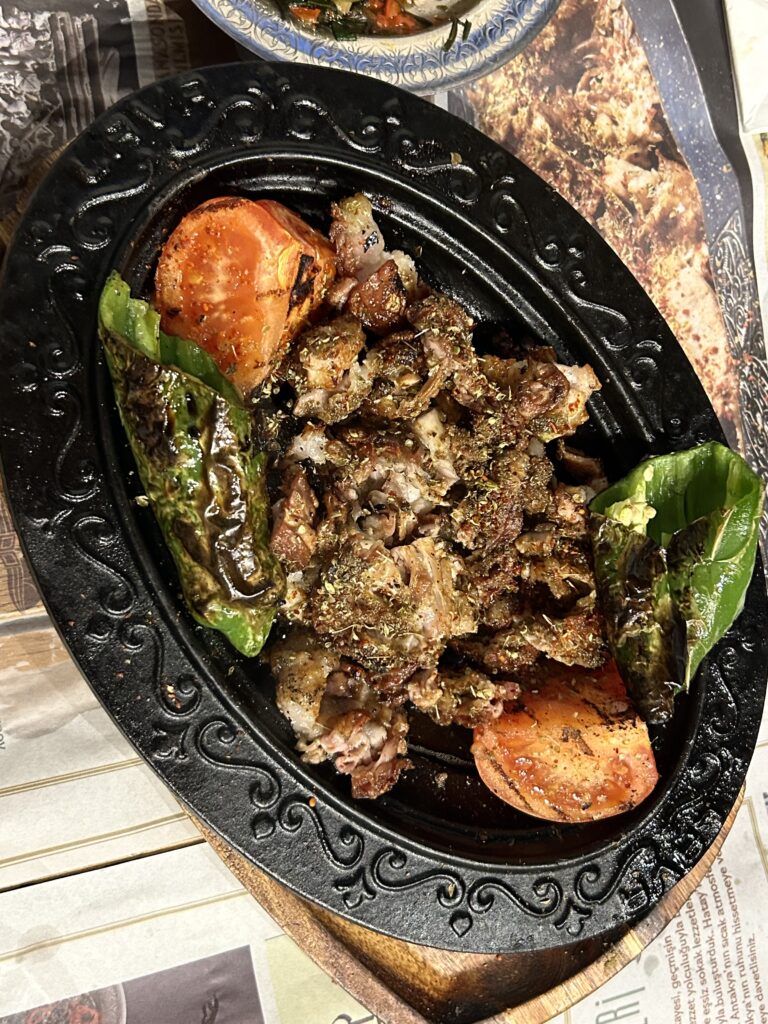
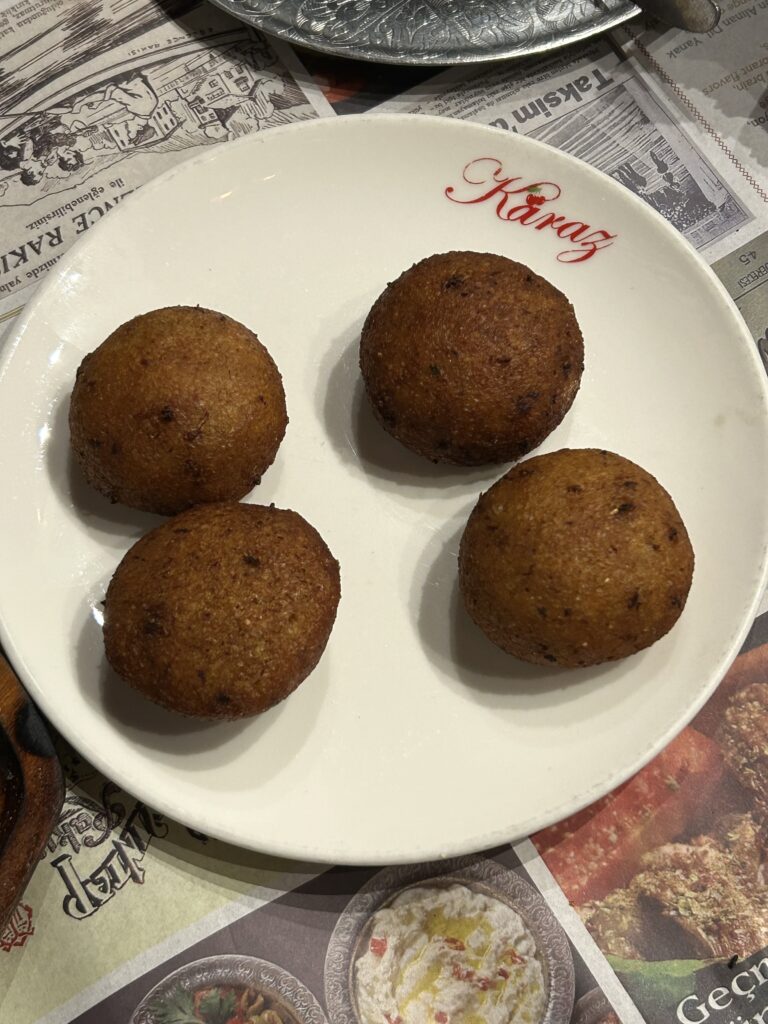
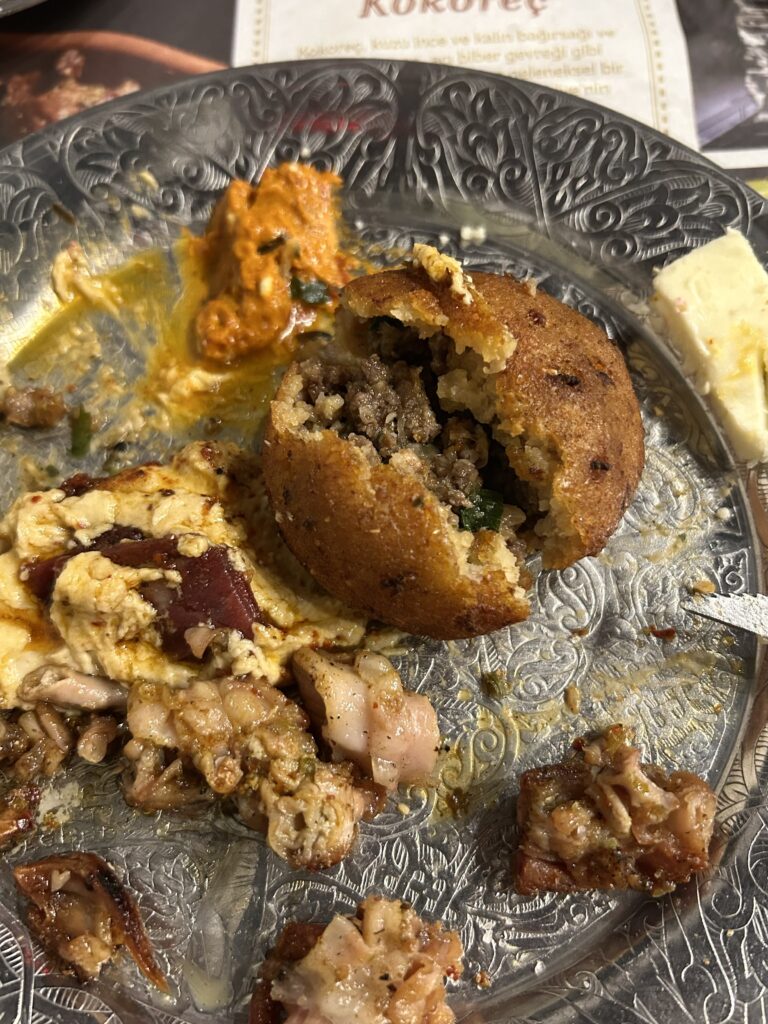
Evidently, as two restaurants of the same authentic cuisine, the menu of Antakya İşi has similar dishes to the ones offered at Antiochia. However, it does not lack any specialties of its own. The Humus here is very special as it is proudly made by İbrahim Usta. (Usta is a title used for someone who is master or competent at a craft.) Ibrahim was one of the victims of the 2023 earthquake in Antakya during which he lost his home and his storage of ingredients, not to mention the tragedy of losing family members and friends. The quality of İbrahim’s Humus, which is often described as unmatched in Istanbul, is due to his training and the quality of the ingredients he uses. Apparently, he went to Lebanon from Antakya when he was seventeen and worked under an Armenian chef for 10 years. After returning to Antakya, he set up his own business making humus and other meze for 36 years, until the earthquake. According to him, what makes his Humus special is the tahini, which is his own making, and the special type of chickpeas that he uses. Other dishes of interest at Antakya İşi can be Midye Dolma (stuffed mussels), İçli Köfte (stuffed meatballs with a bulgur wheat coating and a stuffing made of onions, minced lamb or beef meat, walnuts and spices—it can be boiled or fried) and Kokoreç (a traditional Turkish dish made of lamb’s sweetbread and small and large intestines, seasoned with a variety of spices). Once again, making a reservation is recommended.
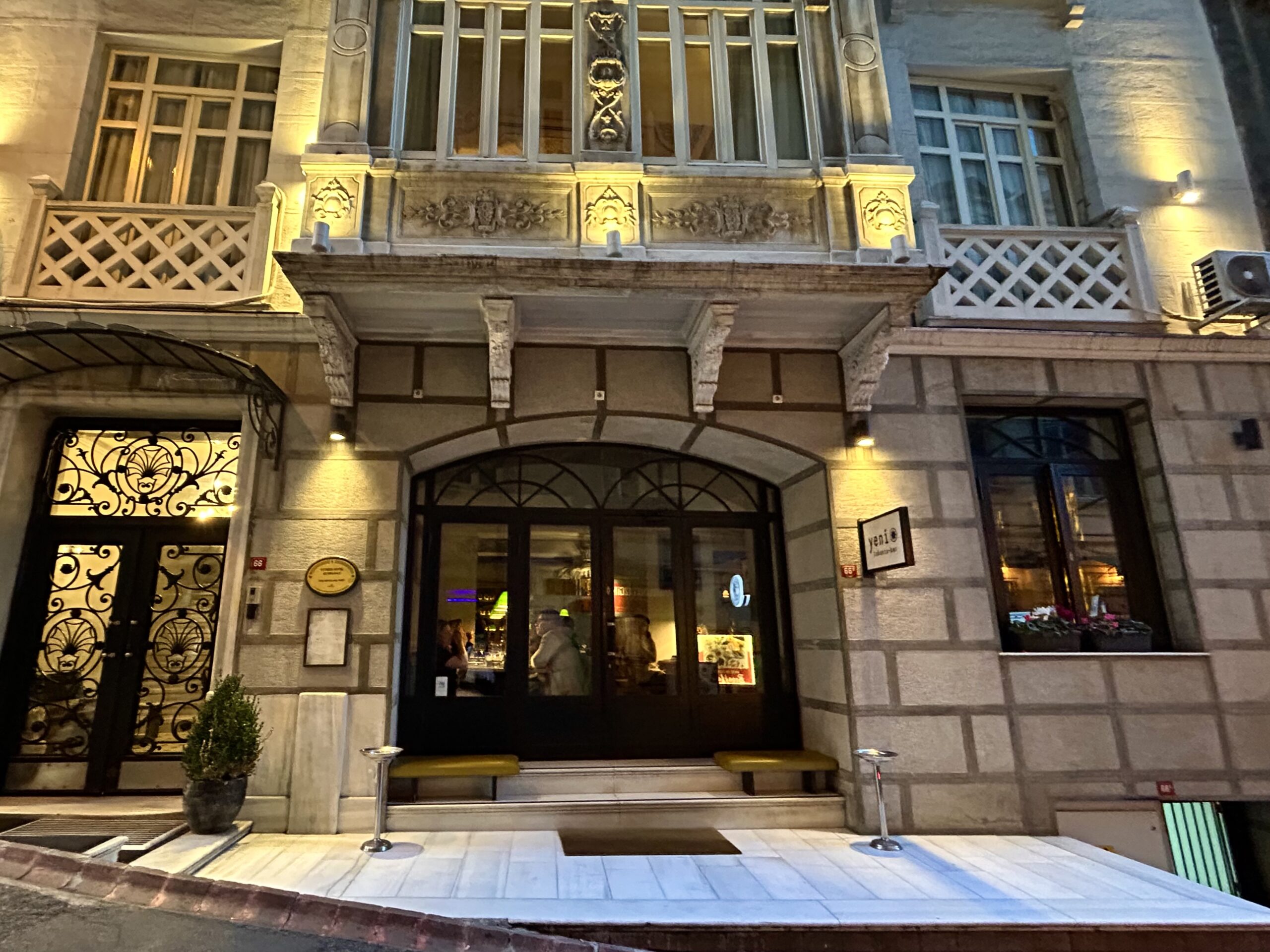
The last restaurant that I will recommend in the area is Yeni Lokanta. Located close to the top of a down-sloping side street off the İstiklal Avenue, at Kumbaracı Yokuşu 66/B, it is a Michelin recommended restaurant. The restaurant which has been in operation at this location since 2013, inaugurated a second restaurant in London in 2019, under the name Yeni London. This latter restaurant is also on the recommendation list of Michelin for London. The chef and owner of both restaurants, Cihan Er, combines his nearly three decades of experience, traditional Turkish tastes, flavours and cooking techniques with a state-of-the approach and interpretation.
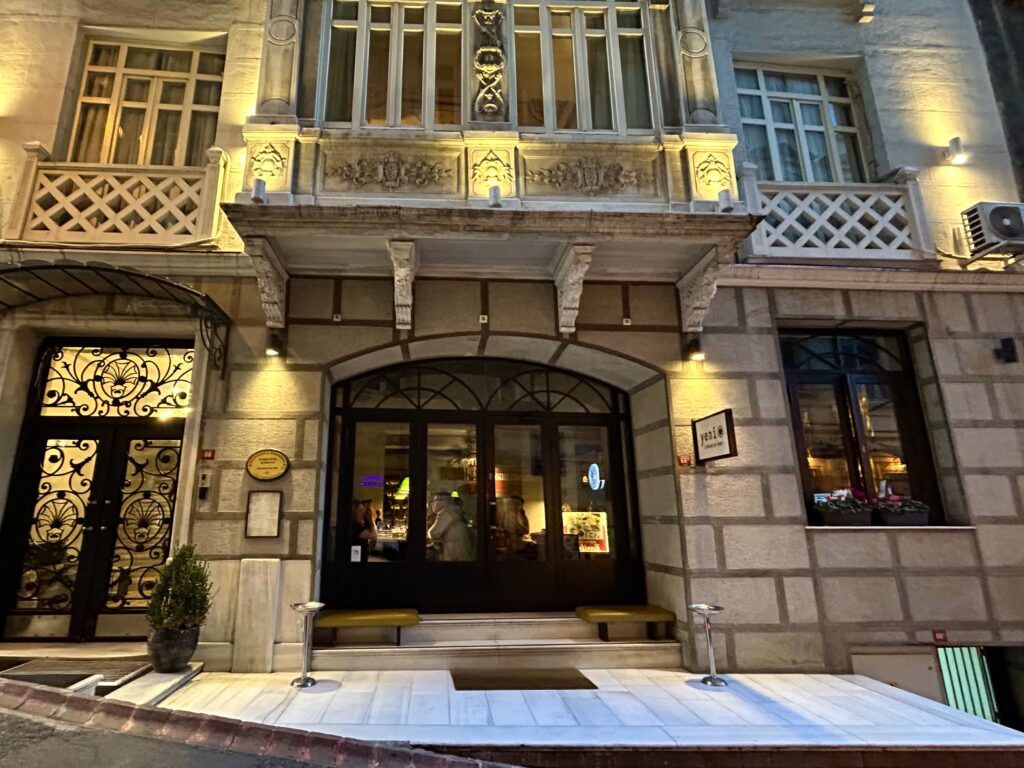
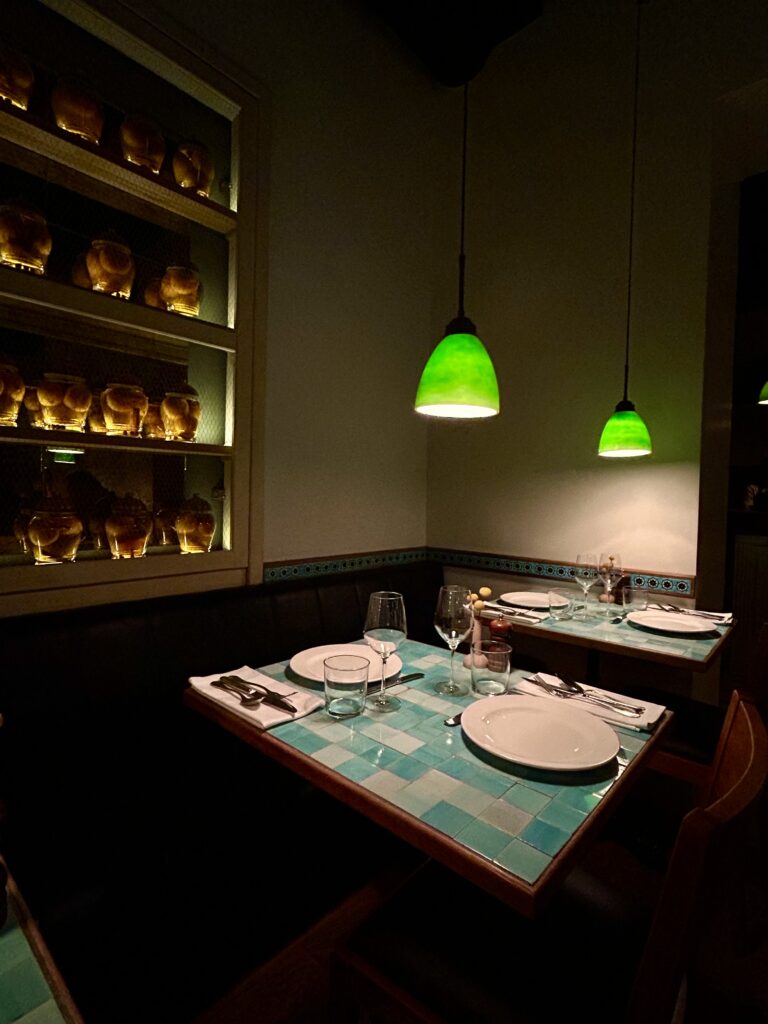
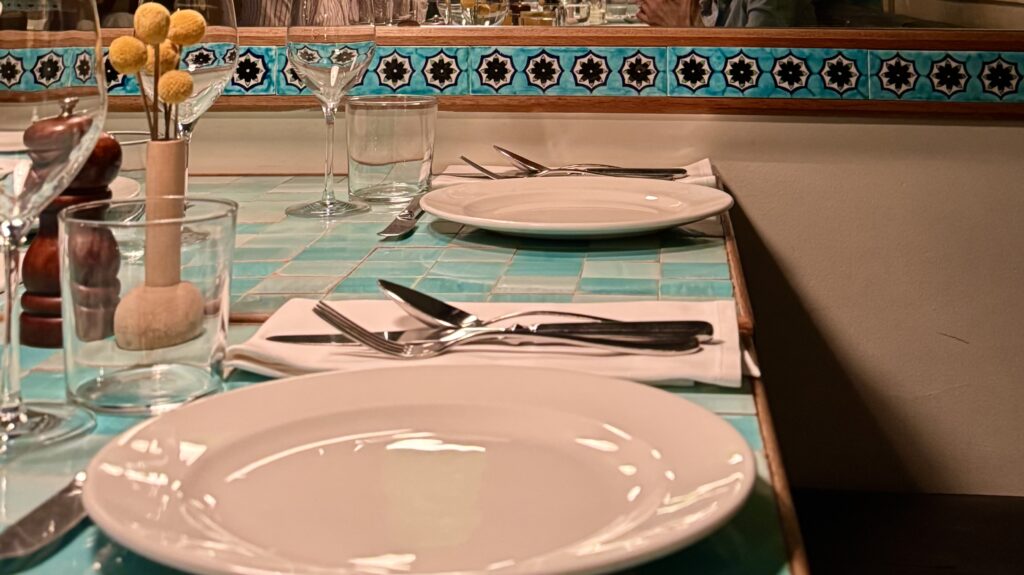
Yeni Lokanta has a very pleasant atmosphere with its dim illumination and turquoise colour tiles. You can order à la carte or choose one of the set menus which can be either a seven-course or a nine-course one. (Please note that the general menu and the number of courses on the set menus may differ depending on the time of the year and the policy of the restaurant.) You can pair your choice of lunch or dinner with good locally produced wines, made of endemic grapes. They also have wonderful cocktails that you can try.
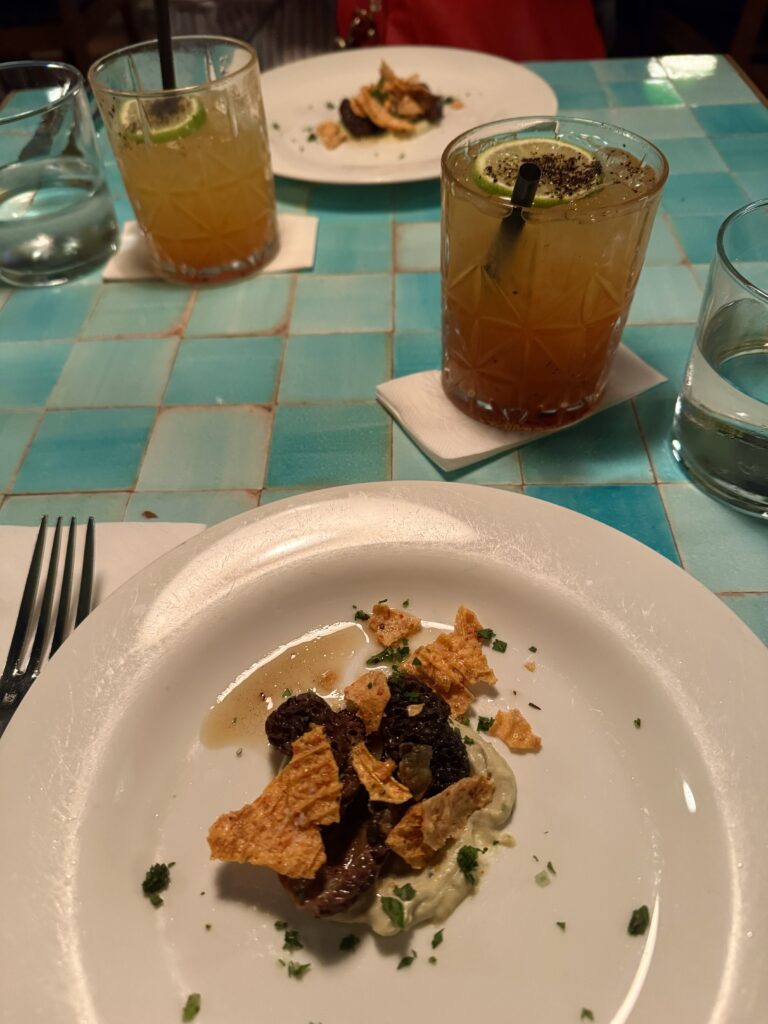
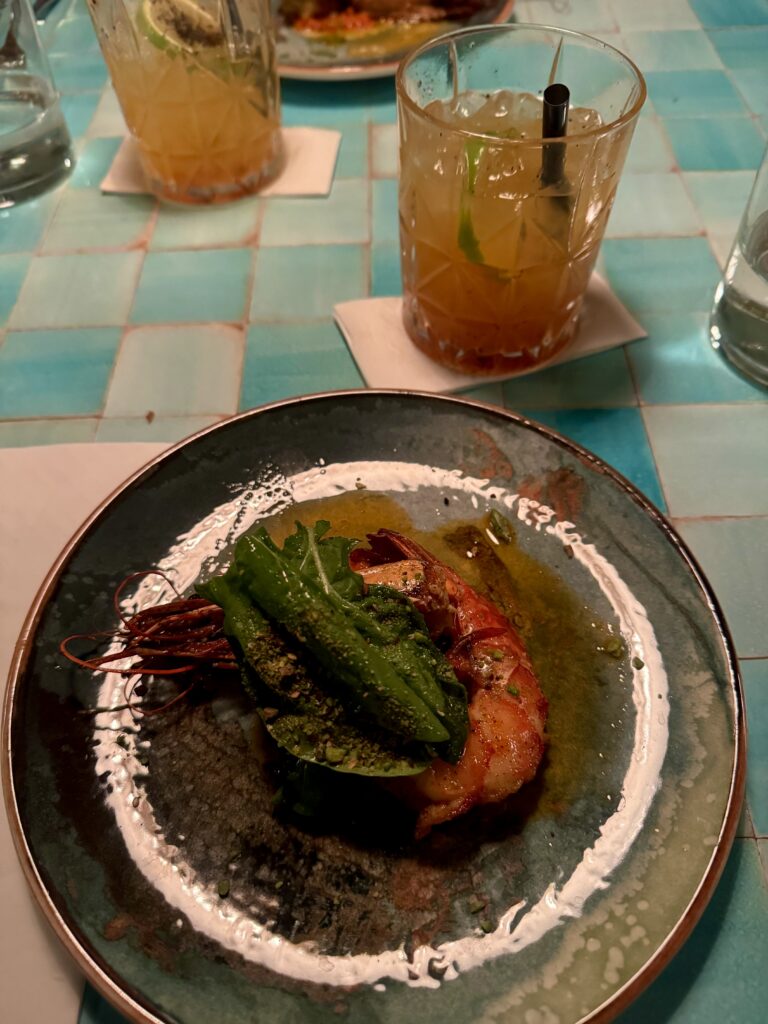
Making a reservation well in advance is definitely recommended. You can reserve a table for indicated time slots on the restaurant’s website (www.yenilokanta.com). It is important to keep in mind that dinner is served in three two-hour sessions and that your timing should comply with the schedule.
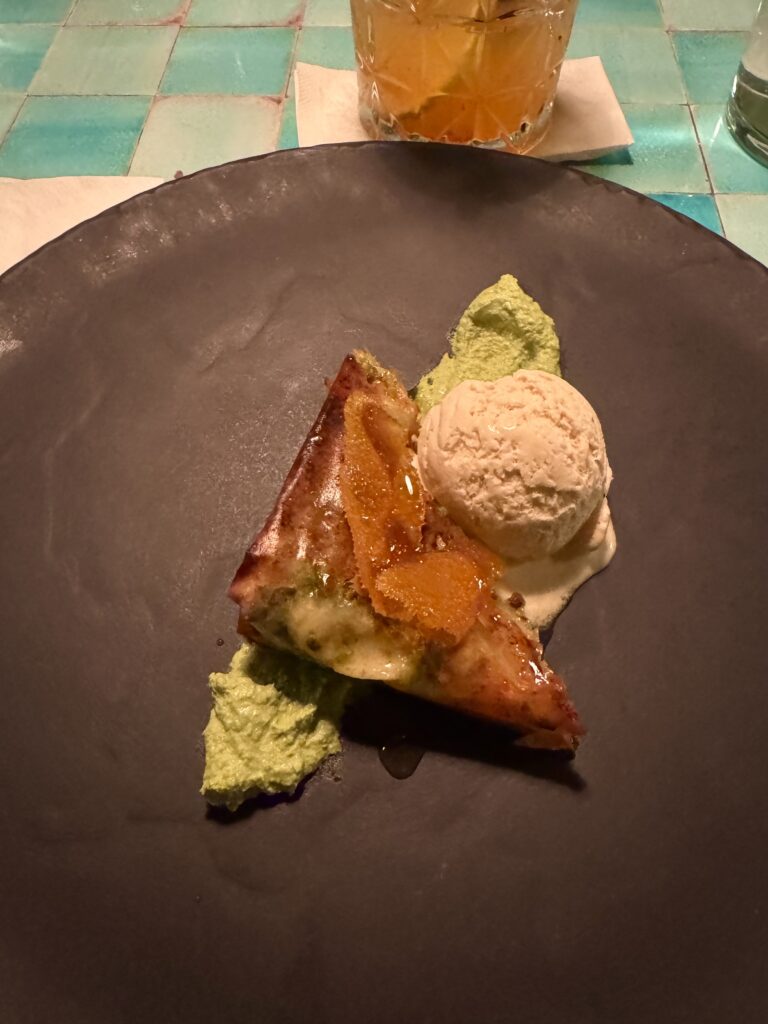
(If Yeni Lokanta’s concept is to your liking, you might also want to try another restaurant in Nişantaşı which I wrote about in a previous post: A Glimpse of Turkish Wines and Somewhere You Can Taste Them.)