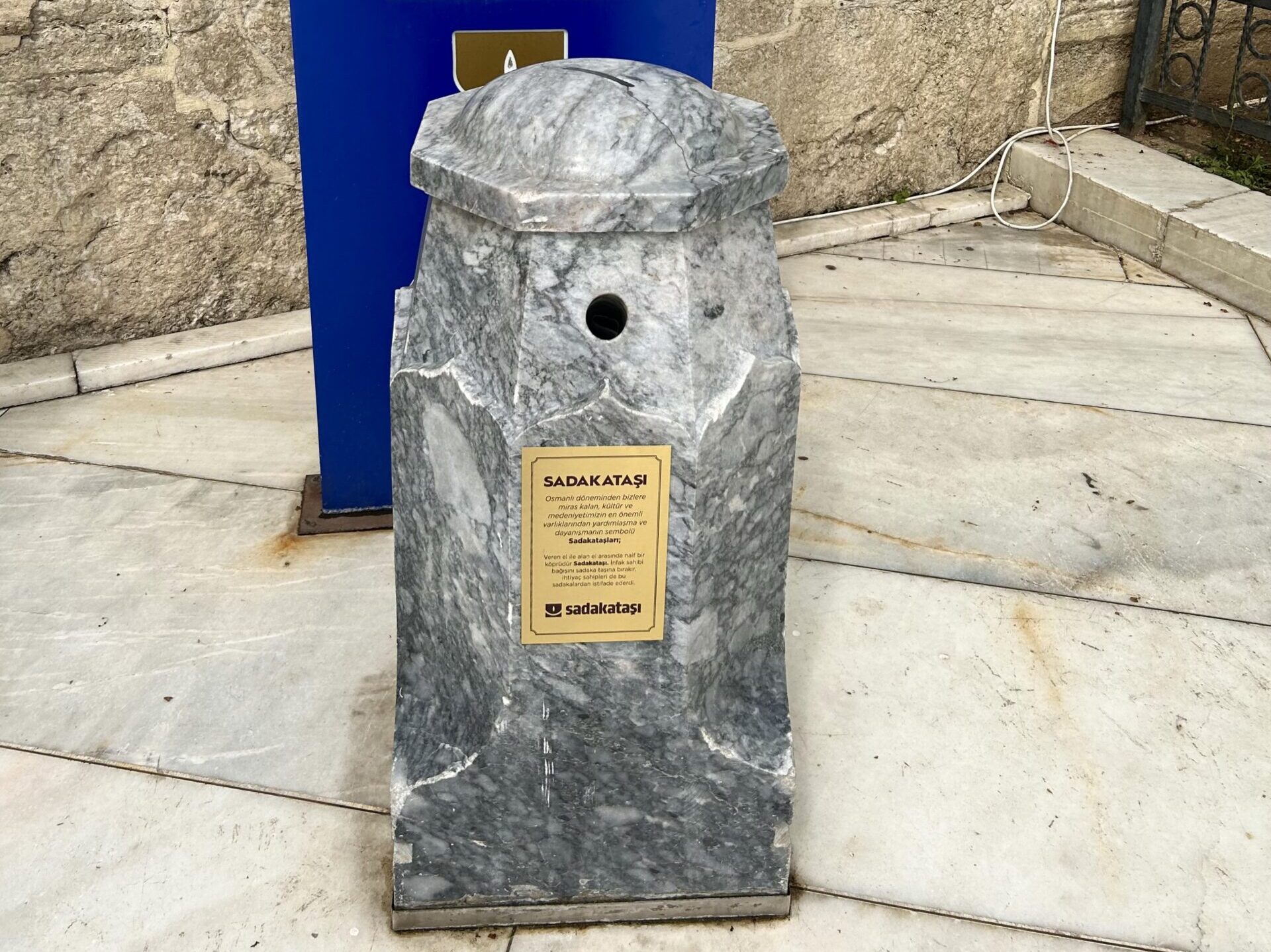
The tradition of helping the poor has been a part of religious faith and social responsibility among Turks for many centuries. Giving alms to those in need is an important component of their religion and there are specific rules related to the timing and quantity of the monetary charity that is required from the followers. These are usually donated formally via mosques or religious institutions which in turn are supposed to make sure that they reach the right hands.
Apart from the ecclesiastical rule, there has also always been a social practice among Turks of helping people who are in need. However, this solidarity among fellow citizens also demanded a sense of propriety. Being civil required the benefactor to avoid the indecency of seeming haughty and pompous. The vanity of boasting as an almsgiver was unacceptable as this would most definitely humiliate the taker. This was the motivation behind the tradition of Alms Stones.
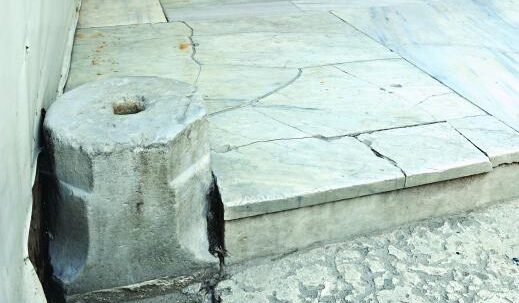
Source: istanbultarihi.ist
Alms Stones go back to the times of the Turkish Seljuk Empire but they really flourished during the Ottoman era. These means of social aid are one-piece granite or marble, usually cylindrical columns with holes or openings to put into and take coins from in turn. Since the act of putting and that of taking the alms were always performed in the dark hours, no one knew who was the giver and who the taker. This secrecy was to help those who were really in great need but who were too proud to ask for help or to beg. Named as Sadaka Taşı in Turkish, they were usually placed in easily accessible places around the city such as mosque complexes, fountains, bridges, mausoleums, inns, religious sect lodges or sometimes simply at street corners.
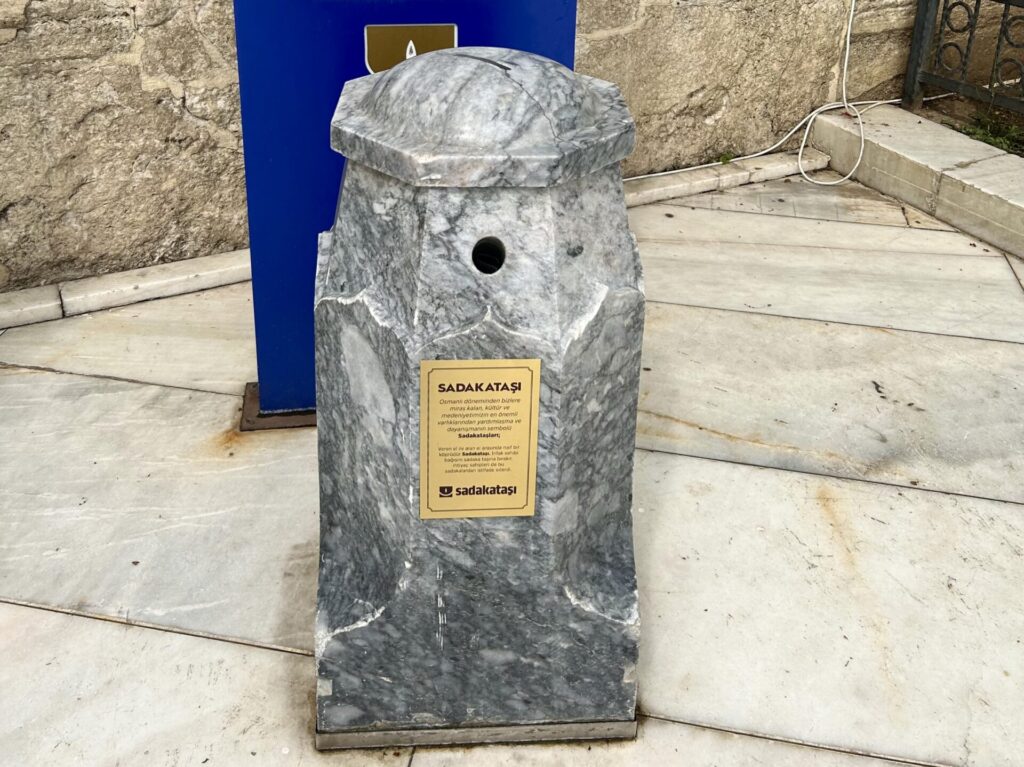
Although the majority of them have been destroyed, Alms Stones can still be detected around Istanbul by eyes who can see. Most of them may be unnoticed by passers-by because they had been converted from the ancient pillars of older monuments at the time. They either have a small hole or a basin at the top to put the coins. Some of the stones are today shorter than they used to be due to the changes of street levels over the centuries. Their original heights are thought to be between 0.80-1.40 m. Sometimes, Alms Stones can be built-in on monuments such as the one on the wall of the fountain in the courtyard of the Süleymaniye Mosque. In those cases, the opening on the wall serves the same purpose.
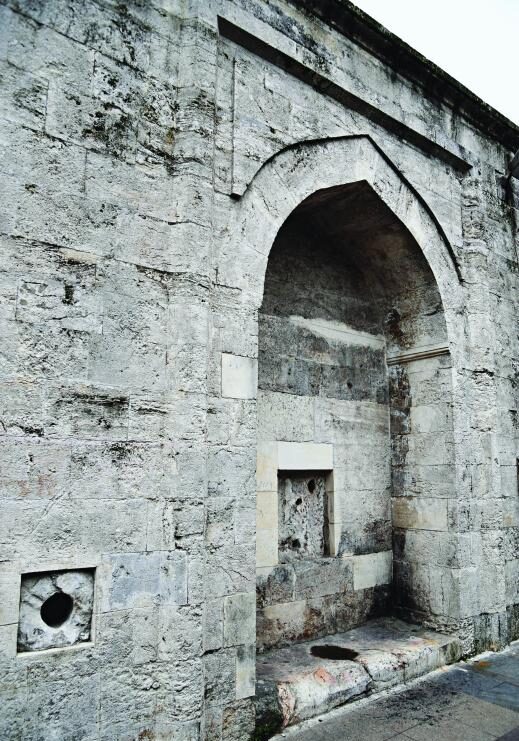
Source: istanbultarihi.ist
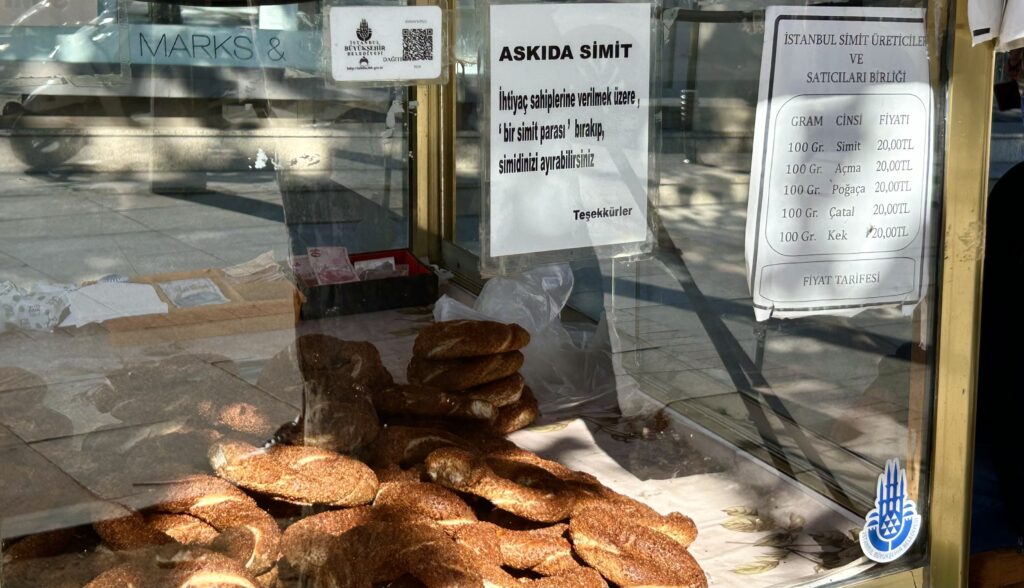
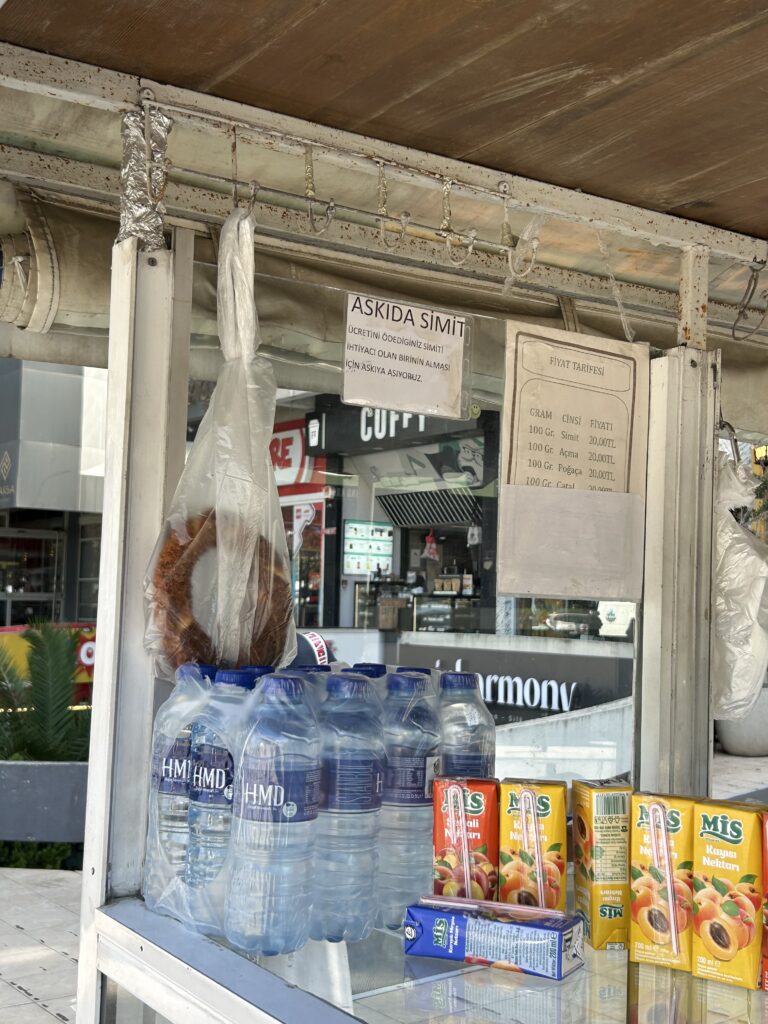
The tradition of giving and receiving charity without disclosing one’s identity still continues in the Turkish society. The tradition originated from bakeries with the term “askıda ekmek” which literally means “bread on the rack”. It means that whenever you buy bread for yourself, if you want to, you can also buy an extra (or as many as you want) for those in need too. The extra paid loaves will be put on the “rack” and be given by the baker to poor people who come asking if there are any. By definition, anything can be “on the rack” but, it is most widely used for basic nutritional needs. For example, an “askıda ekmek var” (there is bread on the rack) sign on a bakery’s window will clearly tell you that you can express your compassion for a person unknown to you by buying an extra loaf of bread and vice versa. Similarly, an “askıda simit var” sign on a street vendor’s cart will inform both sides of the possibility of buying and getting a simit, a popular Turkish street food, for free.
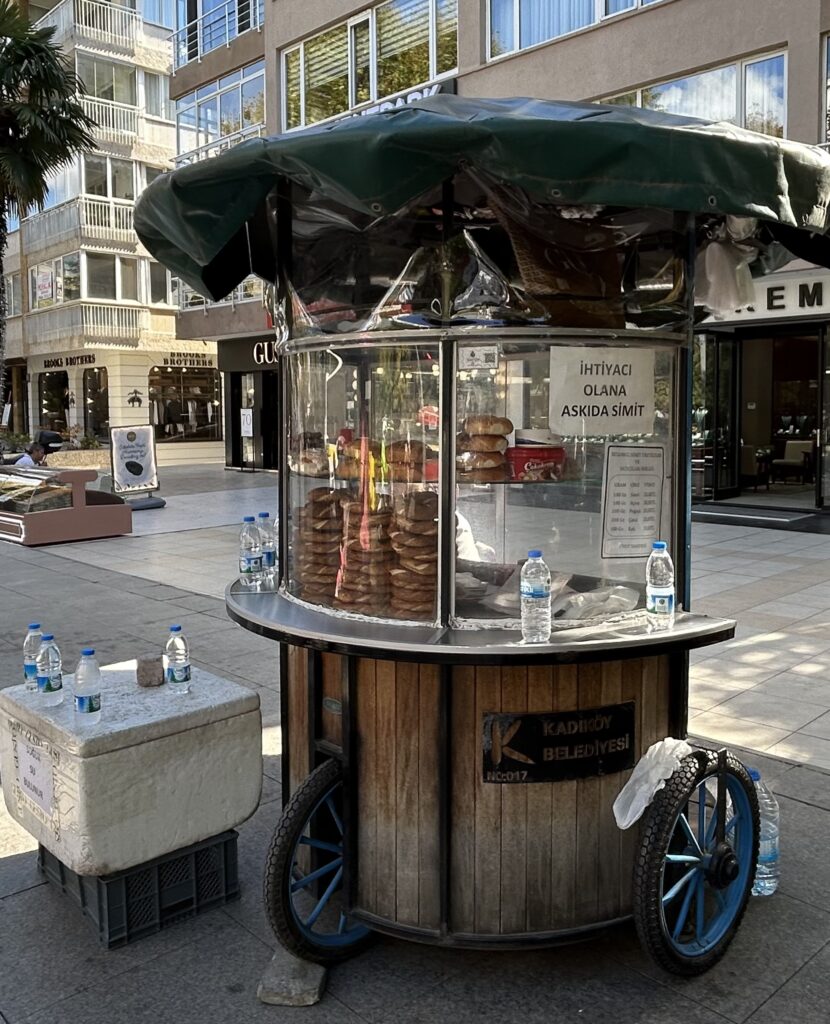
“Simit On The Rack For Those Who Are In Need”
The idea of buying an extra meal, bread, etc. for someone in need was taken by visiting foreigners to their homelands. The practice of buying a coffee “for the rack” is being encountered more frequently nowadays in some parts of the US and some European countries.
The creative idea of designing a social aid system based on the same understanding to help the disadvantaged members of the community during the pandemic brought Istanbul a meaningful international prize as well. The Istanbul Metropolitan Municipality was one of the 15 cities (out of 631) that was awarded with the Bloomberg Global Mayors Award. Istanbul’s project, Askıda Fatura was an online Pay it Forward system where donators were able to pay the utility bills of Istanbulites who struggled with the economic conditions of the pandemic period. The project not only provided a prize of $1,000,000 for Istanbul but also globally inspired other cities for similar practices.
Ulgen’cigim, yine herzmanki gibi cok keyifle okudugum, yeni bilgiler edindigim bir yazi.
Ellerine, kalemine saglik…
Canan’cığım, beğenmene çok sevindim. Geri bildirimlerin beni her zaman çok motive ediyor. Çok teşekkür ederim canım.